

Hard Wheat vs Soft Wheat: What’s the Difference? | Kathait Gold
Hard Wheat vs Soft Wheat: A Comprehensive Guide to Choosing the Right Flour
Whether you are baking artisan bread, preparing delicate cakes, or making soft everyday rotis, the type of wheat you choose has a major impact on texture, taste, and performance.
The two most common categories are hard wheat and soft wheat. Understanding their differences helps you select the right flour for better cooking and baking results.
What is Hard Wheat?
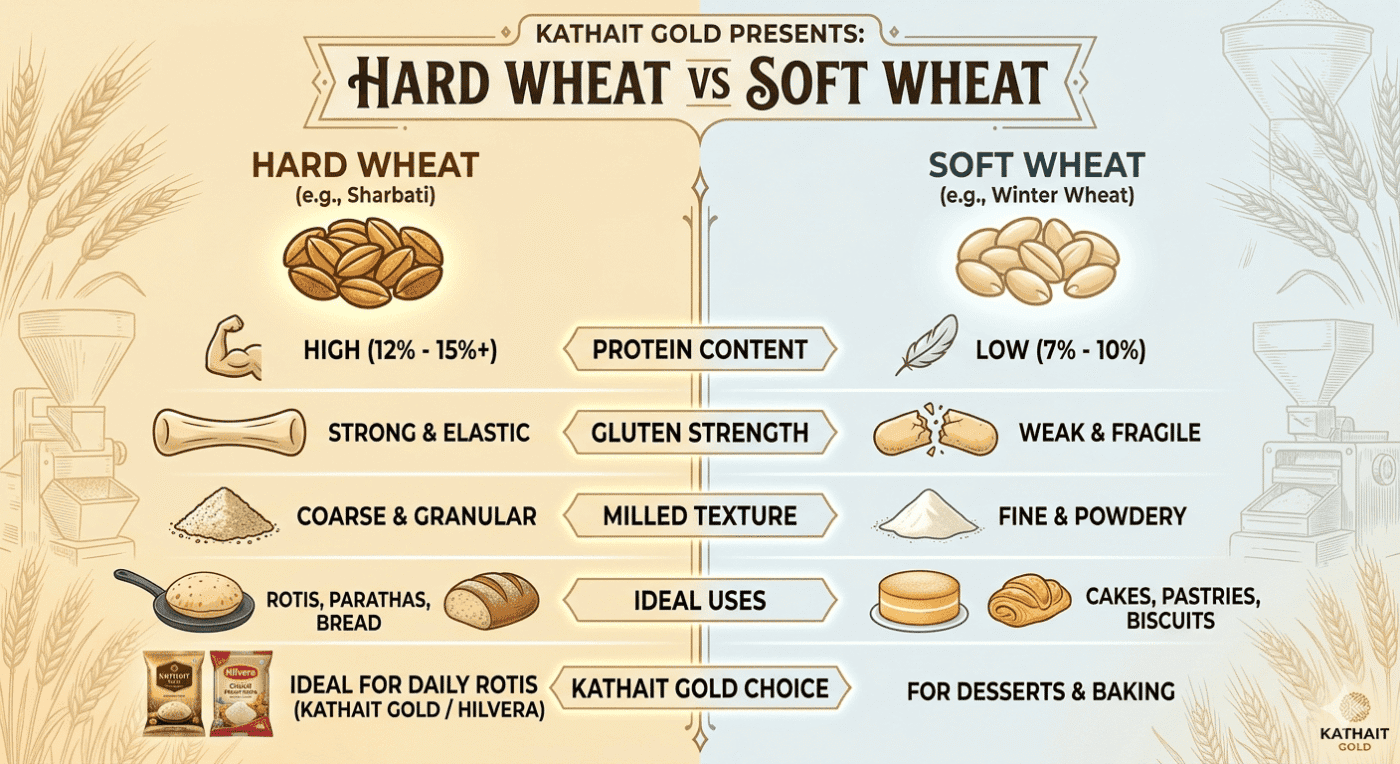
Hard wheat contains a strong endosperm and higher protein content, generally ranging between 10% and 14%. This high protein level creates stronger gluten development when mixed with water and kneaded.
- Higher protein content
- Strong gluten structure
- Elastic dough formation
- Slightly coarse flour texture
- Excellent for breads and rotis
Best Uses for Hard Wheat
- Artisan breads and sandwich loaves
- Rotis, chapatis, and parathas
- Pasta and durum wheat products
- Traditional Indian flatbreads
What is Soft Wheat?
Soft wheat contains lower protein levels, usually between 6% and 10%, resulting in weaker gluten formation and a softer flour texture.
- Lower protein content
- Weak gluten formation
- Fine and silky flour texture
- Produces tender baked goods
- Suitable for cakes and pastries
Best Uses for Soft Wheat
- Cakes and sponge recipes
- Cookies and biscuits
- Pastries and pie crusts
- Crackers and delicate baked products
Hard Wheat vs Soft Wheat – Quick Comparison
| Feature | Hard Wheat | Soft Wheat |
|---|---|---|
| Protein Content | 10% – 14% | 6% – 10% |
| Gluten Strength | Strong & elastic | Weak & tender |
| Texture | Coarse & granular | Fine & powdery |
| Water Absorption | Higher | Lower |
| Best For | Bread, rotis, pasta | Cakes, cookies, pastries |
Why the Milling Process Matters
Wheat quality alone is not enough — the milling process also affects nutrition and texture.
Modern roller mills often remove bran and germ layers to create refined flour, reducing natural fiber and nutrients.
Traditional Chakki grinding helps retain wheat bran and germ, producing more wholesome and flavorful flour with natural nutritional value.
Choosing the Right Flour for Your Kitchen
If your goal is preparing soft, nutritious rotis and parathas, high-quality Chakki Fresh Atta made from premium hard wheat is generally preferred.
- 100% natural ingredients
- No preservatives or bleach
- Fresh milling process
- Good aroma and texture
- Trusted manufacturing practices
Conclusion
Understanding the difference between hard wheat and soft wheat helps you make better choices for baking, cooking, and nutrition.
Hard wheat is ideal for breads and Indian flatbreads because of its strong gluten structure, while soft wheat performs better in cakes, pastries, and delicate baked recipes.
Choosing high-quality Chakki Fresh Atta made from premium wheat can improve both taste and nutritional value in everyday meals.
👉 Explore premium wheat products at:
KathaitGold.com
Frequently Asked Questions (FAQs)
Which wheat is better for making soft rotis and parathas?
Hard wheat is generally preferred because it forms elastic dough suitable for rolling and puffing.
Can soft wheat flour be used for bread?
Soft wheat flour is not ideal for bread because it lacks strong gluten structure.
How can I identify hard wheat flour?
Hard wheat flour usually has higher protein content and a slightly coarse texture.
Is Chakki Fresh Atta made from hard wheat?
Most traditional Chakki Fresh Atta products are prepared using premium hard wheat varieties.
How should whole wheat flour be stored?
Store flour in an airtight container in a cool and dry place for better freshness and shelf life.