


How to Store Atta Properly: Complete Guide to Freshness
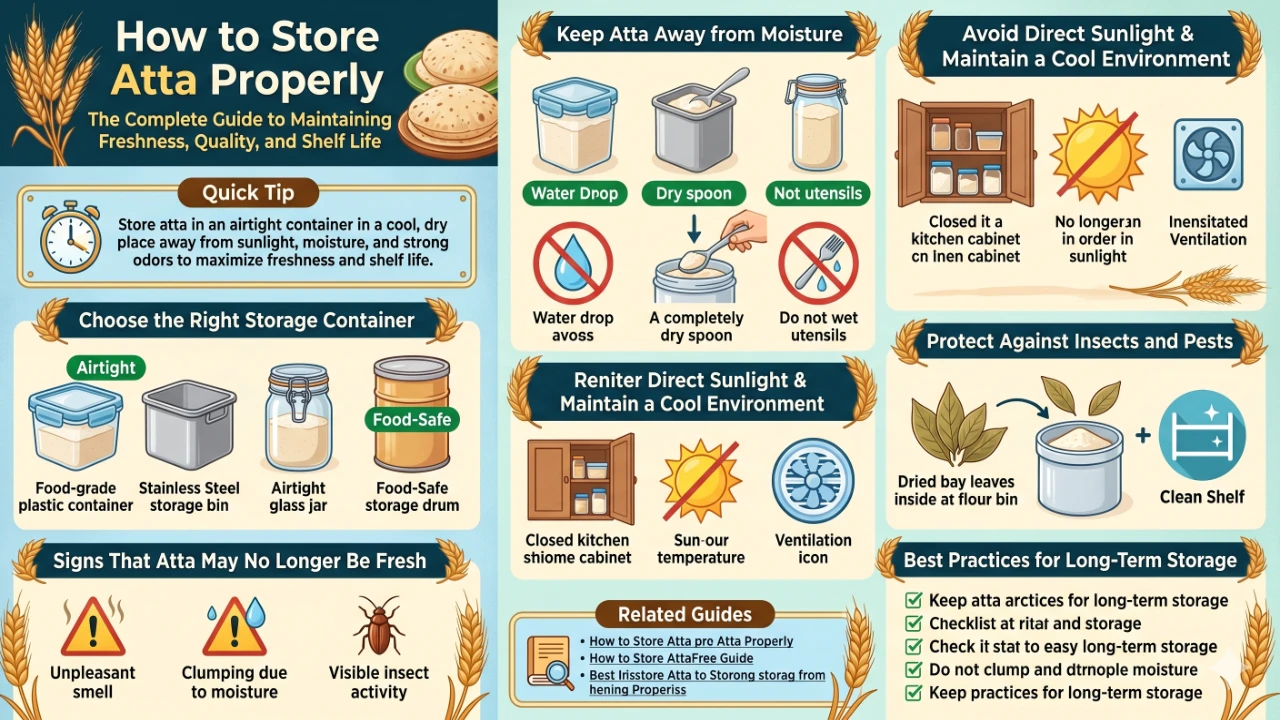
How to Store Atta Properly: Complete Guide to Maintaining Freshness, Quality, and Shelf Life
Atta is the heart of the Indian kitchen. It forms the foundation of everyday meals, turning into soft rotis, chapatis, parathas, and traditional breads that fuel our families. However, even the highest-quality whole wheat flour can lose its natural aroma, nutritional value, and soft-kneading texture if it is not stored correctly.
Proper storage practices protect your flour from moisture, pantry pests, environmental contamination, and nutrient degradation. Whether you buy flour in small weekly batches or stock up for a few months, learning how to store atta properly reduces food waste and ensures consistent cooking performance every single day.
Why Proper Atta Storage Matters
Authentic, stone-ground whole wheat flour contains natural oils, wheat germ, dietary fiber, vitamins, and minerals. Because it retains these nutritious elements, it is more sensitive to environmental changes than highly processed flours. Exposure to heat, high humidity, and open air causes these natural oils to oxidize, leading to staleness.
According to established regulatory food hygiene principles, milling products require strict dry-zone preservation to block biological hazards. Investing a few minutes into proper storage helps you:
- Maintain Original Aroma: Preserves the sweet, earthy smell of traditional chakki grinding.
- Prevent Moisture Buildup: Eliminates clumping and stops microscopic mold from developing.
- Stop Pest Infestations: Keeps common pantry bugs like flour weevils (red flour beetles) completely out.
- Protect Nutritional Purity: Safeguards vital B-vitamins and minerals from degrading over time.
- Extend Total Shelf Life: Keeps flour fresh for up to several months without losing quality.
- Ensure Soft Rotis: Retains the exact moisture-binding properties needed for soft, pliable dough.
Choose the Right Storage Container
The container you choose is your first line of defense. Once you open a fresh commercial pack of flour, you should immediately transfer it into a dedicated, clean, and thoroughly dry storage vessel.
The FSSAI Guidance Document for Flour Milling Sector mandates that all food-contact surfaces and storage bins must be non-corrosive, smooth, easy to clean, and constructed strictly of food-grade materials to prevent any cross-contamination.
Recommended Containers for Long-Term Storage
- Stainless Steel Bins (Kothi): The traditional Indian choice. It provides excellent protection against ambient temperature drops, light exposure, and pests.
- Food-Grade Plastic Containers: High-quality, BPA-free plastic bins equipped with secure silicone or rubber gasket seals.
- Airtight Glass Jars: Ideal for smaller quantities or everyday countertop use, provided they are kept inside a dark cupboard.
No matter which material you choose, the lid must be completely airtight. Twist-lock or clip-lock mechanisms provide the tightest seal against moisture and pests.
Keep Atta Safe from Moisture and Humidity
Moisture is the single biggest threat to flour quality. In humid subtropical zones, atmospheric moisture can cause your flour to clump, spoil rapidly, and develop sour mold strains.
To keep your kitchen storage perfectly dry, follow these simple safety rules:
- Pick a Dry Zone: Never store your main flour bin underneath the kitchen sink, right next to the dishwashing area, or near a boiling stove.
- Use Dry Utensils: Ensure your hands, measuring cups, and scoops are completely bone-dry before dipping them into the flour container.
- Dry Completely Before Refilling: When washing your storage containers between batches, let them air-dry under the sun for a few hours before pouring in a new batch of fresh flour.
Avoid Direct Sunlight and Heat Exposure
High temperatures accelerate chemical breakdown. When whole wheat flour is exposed to direct sunlight or ambient kitchen heat, the natural fats break down, causing the flour to smell sour or bitter.
For the best everyday results, position your storage inside:
- Low-level kitchen cabinets that stay cool.
- A dedicated, dark pantry room away from windows.
- Closed storage units away from heat-generating appliances like ovens, refrigerators, or microwaves.
Protecting Against Pantry Bugs and Weevils
Flour weevils can ruin a whole batch of flour if given the chance. Preventing them is significantly easier than dealing with an infestation after it happens.
Natural and Effective Preventive Measures
- The Dried Bay Leaf Trick: Drop 3 or 4 completely dry bay leaves (Tejpatta) or dried neem leaves directly into your flour bin. Their natural scent naturally repels insects without altering the cooking flavor of your flour.
- Keep Shelves Clean: Wipe down your pantry shelves with a mild vinegar solution regularly to eliminate spilled flour particles that attract bugs.
- Don’t Mix Batches: Finish your older flour completely and wipe the bin down before refilling it with a fresh batch. Mixing new flour with old remnants transfers hidden moisture and bacteria.
- Buy Trusted Brands: Always choose brands that use hygienic, multi-layered packaging and high-grade milling standards to guarantee pest-free product delivery.
Should You Refrigerate or Freeze Atta?
For standard household use where a pack is finished within 30 to 45 days, room-temperature storage in a dark cupboard is perfectly sufficient. However, refrigeration or freezing becomes highly beneficial under specific conditions such as extreme monsoon seasons, large bulk purchases, or when handling stone-ground raw flour.
It is important to remember that flour is classified as a raw agricultural food crop. As detailed by the FDA Consumer Guidance on Handling Flour Safely, grain grows outdoors in open fields where it can be exposed to environmental bacteria, meaning it must always be treated as a raw ingredient and stored in clean, humidity-controlled settings.
Pro Tip: If you choose to freeze or refrigerate your flour, split it into smaller zip-lock bags. When you bring a cold portion out to room temperature, let it sit sealed until it warms up completely. Opening a cold bag instantly causes condensation, creating damp spots inside the flour.
Signs Your Flour is No Longer Fresh
Before kneading your dough, do a quick sensory check. Do not consume flour if it displays any of these warning signs:
- A Sour, Musty, or Rancid Smell: Fresh flour has a neutral, sweet, and mild wheaty aroma. A stale odor indicates oil oxidation.
- Clumping or Webbing: Small, hard lumps or web-like structures indicate moisture exposure or insect activity.
- Discoloration: Whole wheat flour should hold a consistent, creamy light-brown shade. Dark gray spots mean mold growth.
Frequently Asked Questions
How long can I store whole wheat flour safely?
When stored in an airtight container under cool, dry conditions, commercial whole wheat flour maintains peak freshness for 3 to 6 months. In contrast, freshly milled flour without preservatives is best consumed within 30 to 60 days.
Can I store flour in standard plastic bags?
Thin plastic grocery bags do not block moisture vapor or protect against sharp-toothed kitchen pests. It is always best to transfer your flour into a rigid, airtight glass, steel, or food-grade plastic container immediately after purchase.
What do I do if I find bugs in my flour?
If you catch a few surface insects early, you can run the flour through a fine kitchen sieve. However, if the flour feels clumpy, webs are visible, or the batch smells sour, it has been compromised and should be discarded to preserve food safety.
Conclusion: The Reward of Fresh Flour
Taking a few conscious steps to store your flour properly makes a massive difference in your daily cooking. Protecting your flour from moisture, air, and high heat ensures that every roti you roll stays incredibly soft, rises beautifully, and delivers its maximum nutritional value.
For daily household use, balancing your purchase cycles with your actual monthly consumption is the smartest way to keep your meals fresh, healthy, and completely free of kitchen waste.