
Complete Mustard Oil Guide: Benefits, Uses, & Purity Tests | Kathait Gold

The Complete Guide to Mustard Oil: Benefits, Uses, Purity, Nutrition & Buying Guide
Mustard oil has been trusted in Indian kitchens for generations. From traditional high-heat cooking and heritage pickling to everyday holistic wellness, pure cold-pressed mustard oil remains an indispensable cornerstone of the Indian household. This definitive macro-guide dives deep into everything you need to know about mustard oil: its authentic biochemical profile, proven health benefits, culinary and therapeutic applications, industrial vs. traditional manufacturing processes, structural home purity tests, and expert guidelines for choosing the finest oil for your family’s health.
1. What is Mustard Oil? (Botanical & Chemical Identity)
Mustard oil is a highly aromatic, nutrient-dense fatty fluid extracted from the small seeds of various cultivars within the Cruciferae (or Brassicaceae) family. Botanically, commercial mustard oil is primarily derived from three specific plant types: Brassica nigra (black mustard), Brassica juncea (brown mustard), and Brassica alba or Sinapis alba (white or yellow mustard). Each specific variant imparts a different degree of aromatic intensity, fat density, and color profile to the final product.
Unlike chemically neutral cooking mediums like sunflower or corn oil, unrefined mustard oil behaves as an active ingredient in itself. It is structurally characterized by its deep amber-golden hue, high viscosity, and a signature pungent aroma that triggers sensory receptors in the human eyes and respiratory tract.
From a biochemical perspective, this sharp taste and intense aroma do not exist inside intact mustard seeds. Instead, they are the product of an internal defense mechanism. When mustard seeds are mechanically crushed or exposed to moisture, an enzyme called myrosinase breaks down a group of sulfur-rich compounds known as glucosinolates (specifically sinigrin). This reaction releases a highly volatile oil fraction called Allyl Isothiocyanate (AITC). AITC is responsible for the distinctively sharp, biting sensation that has defined traditional Indian cooking, household wellness, and organic food preservation for thousands of years.
Why Pure Mustard Oil Remains Globally Unique
- Thermal Stability Under Stress: Boasting a high smoke point of approximately 250°C, its lipid structure stands resilient against structural breakdown during extreme cooking methods like deep frying and dry searing.
- Bio-Chemical Preservation Matrix: The volatile isothiocyanates act as broad-spectrum antimicrobial agents, killing off bacterial and fungal spores, which makes the oil an effective natural preservative for pickling.
- Functional Flavor Profile: It provides a deep savory complexity that enhances regional dishes—particularly across North India, West Bengal, Bihar, Punjab, and Uttarakhand—acting as both a heat-carrying lipid and a robust seasoning agent.
2. History and Cultural Evolution in India
The presence of mustard oil in the Indian subcontinent is older than recorded history itself. Archaeological excavations across key sites of the Indus Valley Civilization (such as Harappa and Mohenjo-daro) have unearthed fossilized mustard seed remnants and primitive oil-pressing structural implements, indicating systematic cultivation and processing as early as 3000 BCE.
In ancient classical Sanskrit literature, mustard seeds are documented as Sarsapa, while the oil is referred to as Katu Taila (literally translating to “pungent/sharp oil”). Early medical treatises like the Charaka Samhita and Sushruta Samhita detail its extensive physiological uses. It was prescribed not just as a dietary fuel, but as an essential element in therapies to balance the Kapha and Vata doshas. Its inherent warming properties made it an important therapeutic agent for stimulating digestion, increasing peripheral blood circulation, and treating muscular fatigue.
For millennia, the production of mustard oil was the responsibility of localized rural craftsmen using a heavy wooden mill apparatus called a Ghani. Driven slowly by oxen, these wooden structures crushed the seeds under immense physical weight without generating high friction heat. This communal processing method ensured that every village had access to unadulterated, raw oil that preserved all its natural vitamins, colors, and volatile enzymes.
As culinary cultures evolved regionally, mustard oil became an architectural foundation for diverse cuisines. In West Bengal, it became the defining medium for fish preparations like Shorshe Maach and the pungent mash called Bhartas. In Punjab and Haryana, it became synonymous with cold-weather comfort foods like Sarson ka Saag and robust tandoori marinades. Meanwhile, in the steep mountain terrains of Uttarakhand, its heat-retaining properties made it a crucial daily element for preparing lentils, native greens, and traditional winter provisions.
3. Types of Mustard Oil Available in the Market
Navigating the modern commercial market requires a clear understanding of processing standards. The way an oil is drawn from the seed alters its nutrient preservation, smoke point stability, and culinary value.
A. Kachi Ghani Mustard Oil
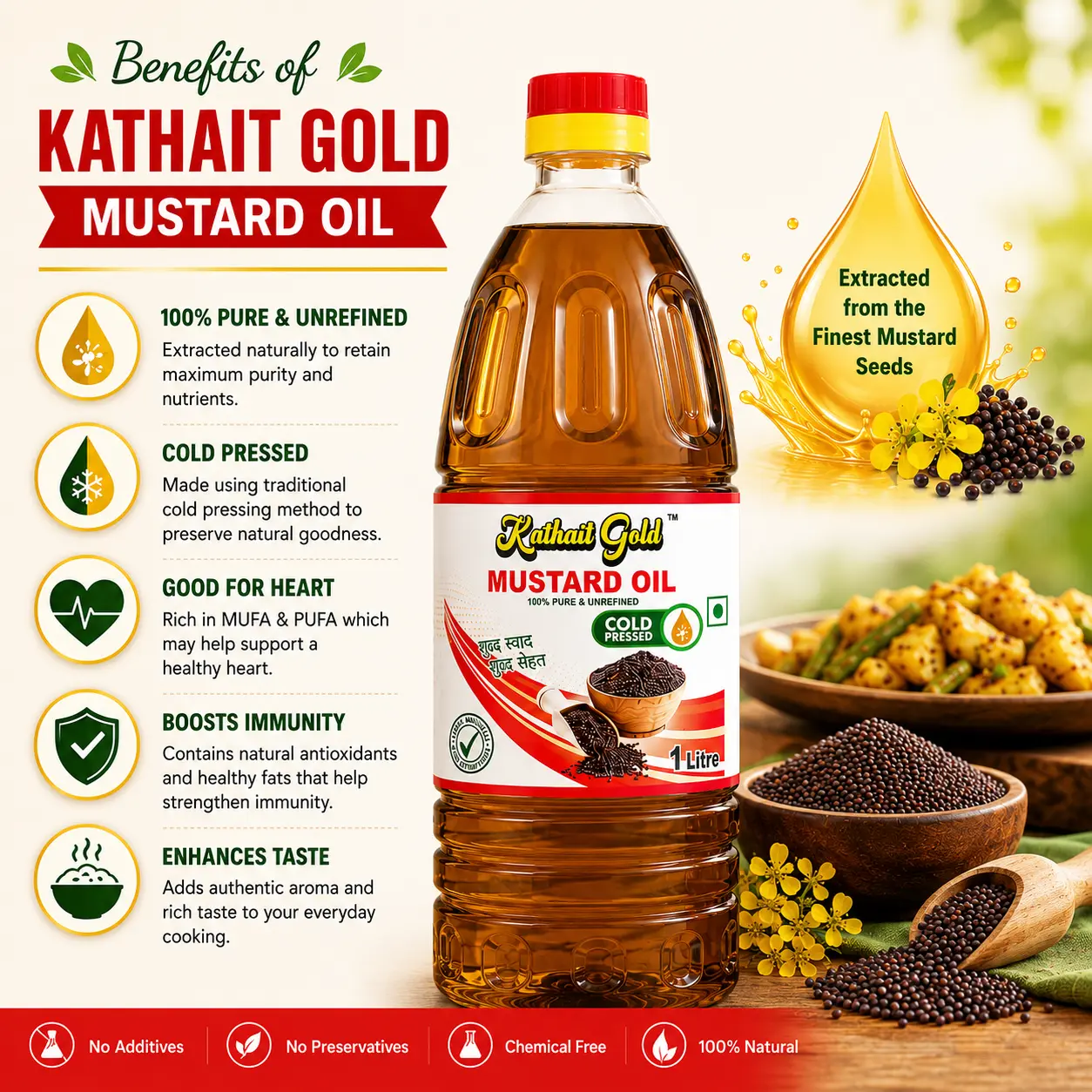
Considered the pinnacle of quality and purity, genuine Kachi Ghani (cold-pressed) mustard oil replicates the traditional slow crushing method through modern, heavy mechanical systems. The seeds are compressed in a single extraction cycle under strictly managed temperatures that never exceed 45°C to 50°C.
- Aroma Profile: Intensely sharp, direct, nasal-clearing.
- Nutrient Density: Complete retention of natural alpha-tocopherol (Vitamin E), polyphenols, and essential fatty acid configurations.
- Visual Aspect: Deep amber-gold, rich translucent clarity.
- Primary Use: Raw pickling, traditional daily gravies, and structural home remedial applications.
B. Expeller-Pressed Mustard Oil
This standard commercial oil is processed using continuous high-pressure mechanical screw press machines. While the extraction process remains entirely mechanical and chemical-free, the intense friction generated within the steel expeller chambers pushes internal temperatures up to 80°C to 100°C.
- Aroma Profile: Moderately sharp, balanced pungency.
- Nutrient Density: Slight degradation of highly sensitive volatile compounds and natural antioxidants due to thermal exposure.
- Visual Aspect: Standard golden hue.
- Primary Use: General household deep-frying, braising, and high-heat commercial sautéing.
C. Chemically Refined Mustard Oil
This product is a result of intensive industrial refining. After initial mechanical expelling, the remaining seed cake is washed with chemical solvents like hexane to extract every last drop of residual oil. This crude oil then undergoes neutralization with alkali compounds, chemical bleaching, and high-heat vacuum deodorization at temperatures over 220°C.
- Aroma Profile: Completely flat, odorless, or chemically neutral.
- Nutrient Density: Stripped of natural volatile nutrients, essential phytosterols, and beneficial plant enzymes.
- Visual Aspect: Extremely pale yellow, thin viscosity.
- Major Drawback: Lacks the traditional wellness benefits and authentic flavor profile found in unrefined oils.
4. The Manufacturing Process: Seed to Bottle
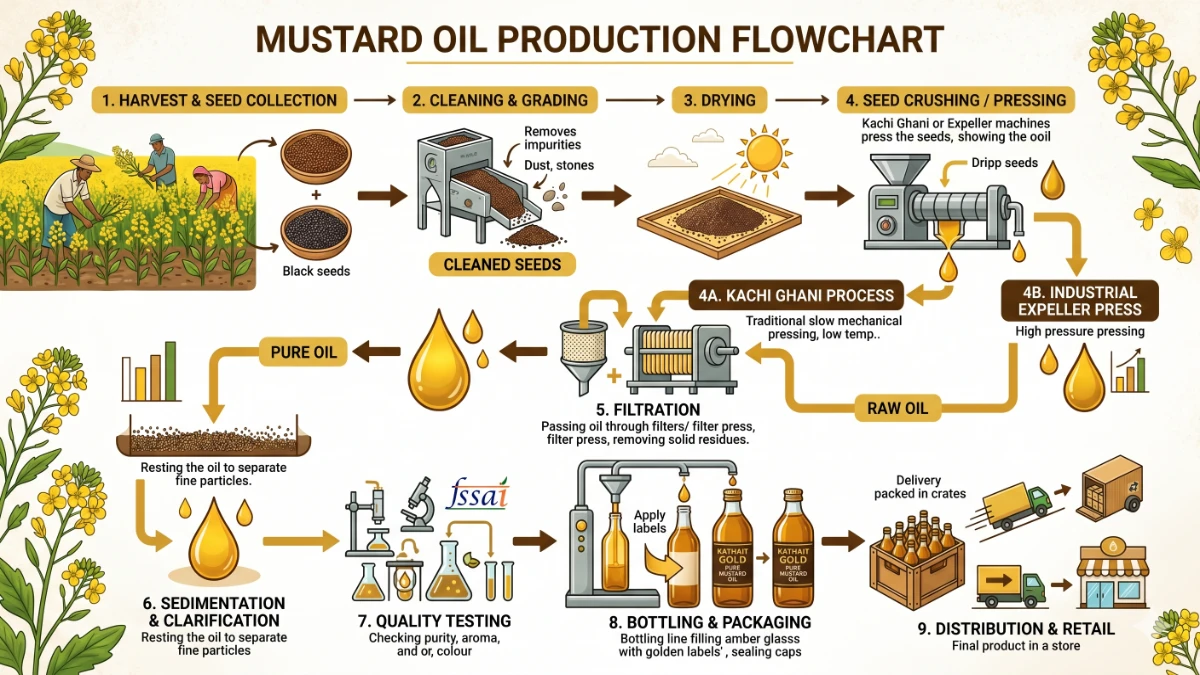
Producing true, unadulterated cold-pressed mustard oil requires deep technical precision at every phase. Below is a step-by-step breakdown of how high-quality seeds are transformed into premium, kitchen-ready oil.

Sourcing & Grading
The process begins in regional agricultural markets, where fully matured, dry, oil-rich black and brown seeds are selected. Batches are tested to ensure their natural moisture content is below 7% to 8%, preventing early microbial spoilage.
Multi-Stage Cleaning
Seeds pass through automated vibrating sieves, destoners, and magnetic separators. This completely removes field dust, small stones, weed seeds, chaff, and metal particles that could compromise product purity or damage extraction machinery.
Cold-Press Extraction
The clean seeds enter heavy cold-press chambers. By slow, mechanical squeezing, the cell walls of the seeds are broken to release raw oil. Internal friction is closely monitored so temperatures stay low, fully preserving the oil’s volatile components.
Natural Sedimentation
The raw, freshly pressed oil is pumped into large holding tanks to rest. Over several hours, microscopic seed fibers and solid residues settle naturally to the bottom of the tank, separating cleanly from the clear oil above.
Mechanical Filtration
The settled oil is passed through heavy, multi-layered cotton filter cloth presses. This physical filtration clears out any remaining cloudiness or micro-particles, giving the oil brilliant clarity and an attractive golden gleam without using a single chemical agent.
Sanitary Packaging
Every batch undergoes rigorous quality testing to verify its natural pungency and FSSAI standards. Once cleared, it is bottled in clean, food-grade amber containers to protect the oil from light exposure and preserve its fresh, sharp quality.
5. Nutritional Value & Fatty Acid Composition
From a nutritional standpoint, pure cold-pressed mustard oil features an exceptional profile characterized by a remarkably low concentration of harmful saturated fatty acids, combined with high levels of heart-healthy monounsaturated and polyunsaturated fats.
A major benefit of unrefined mustard oil is its natural balance of essential lipids. It aligns closely with public macro-nutrient datasets managed by the **Indian Council of Medical Research (ICMR)** and structural clinical research archives on health guidelines, which emphasize including moderate visible vegetable fats rich in anti-inflammatory polyunsaturated variants. Mustard oil hosts an optimal ratio of Omega-3 (Alpha-Linolenic Acid) and Omega-6 (Linoleic Acid), alongside fat-soluble Vitamin E (gamma-tocopherol), a highly potent antioxidant that serves as a natural defensive shield against systemic biological inflammation.
| Biochemical Component Category | Exact Measure / Percentage Value (Per 100g) |
|---|---|
| Total Energy yield | 884 kcal |
| Total Lipid Content (Fats) | 100.00 g |
| Monounsaturated Fatty Acids (MUFA) | 60.00 g to 65.00 g (Predominantly Oleic and Erucic Acids) |
| Polyunsaturated Fatty Acids (PUFA) | 20.00 g to 24.00 g (Linoleic and Alpha-Linolenic configurations) |
| Saturated Fatty Acids (SFA) | 11.00 g to 12.00 g (Remarkably low profile compared to ghee or palm oil) |
| Alpha-Linolenic Acid (Essential Omega-3) | 6.00% to 10.00% |
| Linoleic Acid (Essential Omega-6) | 14.00% to 16.00% |
| Natural Vitamin E complexes (Tocopherols) | Highly abundant (Provides high biological antioxidant tracking) |
| Trans-Fatty Acids & Dietary Cholesterol | 0.00 g (100% Free from processing trans-fat variants) |
6. Comprehensive Health & Therapeutic Benefits
Regularly consuming and using unadulterated cold-pressed mustard oil offers verified physical advantages that span internal health, systemic defense, and dermatological care.
Cardiovascular Health Support
The rich abundance of Monounsaturated Fatty Acids (MUFA) in pure mustard oil plays an important role in supporting heart health. Medical research indicates that a diet inclusive of natural MUFAs helps lower harmful LDL cholesterol and triglycerides, while supporting beneficial HDL cholesterol levels. This balanced lipid profile helps keep arteries clean and clear, promoting long-term cardiovascular health.
Broad-Spectrum Antimicrobial Protection
Thanks to its high concentration of Allyl Isothiocyanate (AITC), cold-pressed mustard oil serves as an effective natural shield against a wide range of micro-organisms. Peer-reviewed research studies archived in the National Institutes of Health repository at PubMed Central demonstrate that its volatile sulfur-rich compounds actively slow down the growth of common foodborne pathogens and fungal spore contamination.
Anti-Inflammatory Joint Relief
Mustard oil contains beneficial compounds that help manage systemic inflammation. When massaged topically onto the body, it acts as a mild counter-irritant, drawing healthy blood flow to dry or sore areas. This increased circulation brings natural relief to tired muscles, stiff joints, and areas prone to arthritic discomfort, helping ease tension and restore comfort.
Digestive System Stimulation
The naturally sharp, aromatic compounds in unrefined mustard oil act as an efficient digestive starter. Simply inhaling its rich aroma and consuming it in food stimulates the secretion of essential gastric juices, bile, and digestive enzymes. This helps fire up a sluggish digestive system, encouraging healthy bowel regularity and smoother nutrient absorption.
Respiratory and Congestion Comfort
A time-tested home remedy in many Indian households, the natural warmth and vapors of mustard oil offer excellent respiratory support. When used as a gentle chest massage or blended with steam, its volatile compounds help loosen stubborn mucus, clear congested airways, and provide comforting relief from seasonal coughs, colds, and sinus pressure.
Skin Barrier Protection & Hydration
Rich in natural Vitamin E and thick, nourishing fatty acids, unrefined mustard oil serves as a deeply hydrating shield for dry skin. It locks in essential moisture, prevents scaling during harsh winter months, and supports the skin’s natural barrier. Its gentle antimicrobial properties also help soothe minor skin irritations and keep the complexion clear and resilient.
7. Multifunctional Uses: Kitchen, Skin, Hair & Joints
Mustard oil is incredibly versatile, extending far beyond the stove to serve various health, beauty, and household needs. Below is an exhaustive look at how to apply its benefits across different areas of daily life.
A. Culinary Mastery & Technique
To extract the best flavor from pure mustard oil, it requires proper handling in the kitchen. In North Indian and Bengali culinary traditions, the oil must be brought slowly to its **smoking point** before adding raw spices or vegetables. This heating step gently structuralizes and smooths out the intense raw bite of Allyl Isothiocyanate, transforming it into a rich, sweet flavor base that deepens the taste of authentic curries, roasted meats, and vegetable stir-fries.
Additionally, because it acts as a strong natural preservative, it is the classic medium for preserving traditional pickles. It cuts off oxygen exposure and prevents structural fungal rot, allowing seasonal mangoes, limes, and chillies to cure safely and develop deep flavors over many months. For a truly robust kitchen lineup, many households pair cold-pressed oil bases with traditional stone-ground elements like unadulterated spices and premium Chakki Fresh Atta to maintain absolute nutritional integrity across every meal.
B. Advanced Hair Care & Scalp Health
As a traditional hair treatment, pure cold-pressed mustard oil offers deep conditioning properties. Its thick texture coats the hair shaft, reducing moisture loss and split ends caused by dryness. When massaged gently into the scalp, its natural warming action boosts local circulation, delivering vital oxygen and nutrients to hair roots. Its inherent antifungal compounds also help maintain a clean scalp environment, effectively reducing flaky dandruff and encouraging thicker, more resilient hair growth.
C. Traditional Body Massage & Therapeutic Care
For generations, warming up mustard oil and blending it with a few cloves of crushed garlic or a pinch of camphor has been a trusted relief method for body discomfort. Massaging this warm blend onto the chest helps soothe seasonal congestion and clear tight airways. When applied to sore muscles or stiff joints, its natural warming qualities soothe deep tissue tiredness, help decrease localized inflammation, and make physical movement smoother and more comfortable.
8. Deep Comparison: Kachi Ghani vs. Refined Cooking Oils
To clearly see why unrefined cold-pressed oils are superior to highly processed variants, let’s examine their core characteristics across key performance metrics:
| Structural Assessment Feature | Pure Kachi Ghani Cold-Pressed Oil | Chemically Refined Industrial Oils |
|---|---|---|
| Extraction Methodology | Slow mechanical pressing at cool, monitored temperatures under 50°C. No chemicals used. | High-heat industrial extraction using chemical solvents like petroleum-derived hexane. |
| Natural Micronutrient Retention | Full preservation of natural Vitamin E, protective phytosterols, and delicate antioxidants. | Stripped away entirely during high-heat neutralization, acid bleaching, and industrial deodorization. |
| Aroma and Taste Profile | Rich, robust flavor with a characteristically sharp, nose-clearing aroma. | Completely flat, odorless, and neutral, lacking any traditional culinary character. |
| Presence of Industrial Additives | 100% pure and unadulterated. Completely free from chemical residues and artificial stabilizers. | May contain trace chemical residues from processing, bleaching clays, and added synthetic preservatives. |
| Preservative Performance | High natural performance due to active antimicrobial compounds, ideal for long-term pickling. | Poor natural protection. Requires adding artificial chemical stabilizers to keep pickled foods from spoiling. |
9. Complete Home Testing & Identification Guide
Because pure mustard oil commands a premium price, it is often a target for industrial adulteration. Unregulated brands sometimes dilute it with cheap palm olein oil, heavy mineral oils, or toxic argemone seed oil to mimic its color. Protecting your family’s wellness is simple with these four reliable home testing techniques:
Test 1: The Refrigerator Crystallization Test
Pour approximately 50ml of your mustard oil into a small, clean glass jar and place it in the main refrigerator compartment (not the freezer) for 2 to 3 hours. Pure, unadulterated mustard oil contains an optimal composition of unsaturated fatty acids, meaning it will remain completely liquid and translucent. If the oil sample has been mixed with cheap palm oil or solid fats, you will clearly see thick white solid layers freezing and settling at the bottom of the glass.
Test 2: The Vigorous Friction and Aroma Assessment
Place 3 to 4 drops of raw mustard oil onto the palm of your hand and rub your palms together fast for 30 seconds. The friction heat will naturally cause the volatile compounds to evaporate. Pure cold-pressed oil will immediately release a sharp, pungent, clean aroma that clears your nose, leaving a clear golden gleam on your skin. If you smell chemical solvent odors, artificial perfumes, raw petroleum hints, or if your hands feel intensely greasy without any strong signature aroma, your oil is likely blended with artificial mineral oils.
Test 3: Visual Color and Translucency Check
Hold a transparent bottle of mustard oil up against a bright, direct light source. Pure cold-pressed mustard oil features a distinctively deep amber-gold color that remains perfectly clear and uniform throughout. If the fluid looks overly pale, light yellow, cloudy, or shows small suspended dark particles, it indicates that the product has either been heavily chemically refined or blended with low-grade oils.
Test 4: Chemical Acid Test for Argemone Adulteration
For a deeper verification, carefully add a small 5ml sample of oil into a test tube along with a few drops of pure nitric acid. Shake the mixture gently and warm it slightly in a water bath. If the fluid changes color, developing a distinct reddish-crimson or pink tint, it confirms the dangerous presence of toxic argemone seed oil, meaning the product should be discarded immediately.
10. Storage Science: Preventing Rancidity & Oxidation
Because pure, authentic Kachi Ghani mustard oil is crafted without synthetic chemical preservatives or artificial stabilizers, its long-term stability relies on correct storage methods at home. When left unprotected, exposure to light, high temperatures, and oxygen can cause rapid oxidation, which breaks down its healthy fatty acids and ruins its rich aroma.
To keep your oil fresh and high-performing for up to a full year, follow these three essential storage guidelines:
- Shield from Direct Light: Store your oil containers inside a dark kitchen pantry, lower cupboard, or enclosed storage chest. Continuous exposure to direct sunlight or bright overhead kitchen lighting triggers photo-oxidation. This process breaks down the oil’s natural chlorophyll and protective antioxidants, causing its deep golden color to fade and diminishing its nutritional value.
- Maintain a Secure, Airtight Seal: Always screw the bottle cap back on tightly immediately after pouring your oil. When left open, the oil is exposed to ambient air, allowing oxygen to bond with its delicate polyunsaturated fats. This leads to oxidative rancidity, which gives the oil a flat, stale taste and strips away its signature sharp aroma.
- Keep in a Cool, Dry Spot: Avoid placing your primary storage bottles on countertops directly next to hot stoves, ovens, or sunny windows. Repeated heat shifts speed up the breakdown of its healthy lipid structure. For daily cooking, transfer a small amount into a small working bottle and keep your main supply tucked away in a cool, stable pantry area.
Bring Pure, Authentic Nutrition into Your Family Kitchen
Great food and lifelong wellness always begin with pure ingredients. When shopping for your family, avoid generic, mass-processed oils that strip away nature’s goodness. In accordance with strict food safety guidelines, the industrial blending or mixing of pure mustard oil with other low-grade vegetable variants is strictly prohibited in the public interest. To verify testing methodologies and legal limits, consumers can cross-reference updates published directly on the official dashboard of the Food Safety and Standards Authority of India (FSSAI). For convenient doorstep delivery, you can check active stock batches across our dedicated e-commerce storefronts, including our main site and our secondary digital market hub at upfrontstore.in. Make the healthy, authentic choice for your kitchen today.
Explore Kathait Gold Mustard Oil12. Detailed Frequently Asked Questions
To help you make the most informed choices for your household, here are detailed answers to the most common questions regarding mustard oil usage, safety, and purity:
Q1: Is mustard oil completely safe for daily family cooking?
Yes, pure unrefined mustard oil is highly stable and exceptionally safe for all types of daily family cooking. Thanks to its naturally high smoke point of approximately 240°C to 250°C, its healthy fats do not break down into toxic compounds when subjected to intense heat. It stands out as one of the most reliable and resilient options for traditional Indian cooking methods, including deep frying, shallow frying, pan searing, and continuous sautéing.
Q2: Why does pure mustard oil cause a sharp, tingling sensation in the eyes during cooking?
This response is actually the ultimate indicator of absolute purity. When high-quality mustard seeds are crushed mechanically, a natural enzyme reaction releases a highly volatile compound known as Allyl Isothiocyanate (AITC). When you heat the unrefined oil, these volatile compounds vaporize into the air, causing a brief, harmless tingling sensation in your eyes and nose. If a brand of mustard oil fails to trigger this natural reaction, it indicates that the product has either been heavily chemically refined or heavily diluted with cheap fillers.
Q3: What makes authentic Kachi Ghani oil different from standard expeller oil?
The primary difference lies in the temperature managed during extraction. True Kachi Ghani oil is squeezed slowly using low mechanical friction, ensuring internal processing temperatures always stay under 50°C. This careful approach fully preserves all natural vitamins, delicate antioxidants, and the oil’s signature sharp aroma. Standard expeller machines use continuous high-pressure steel screws that generate significant friction heat (often hitting 80°C to 100°C), which dampens the oil’s natural aroma and degrades heat-sensitive micronutrients.
Q4: Can I use pure mustard oil directly for personal body massage and skin care?
Yes, pure unrefined mustard oil acts as an excellent, deeply hydrating barrier oil due to its rich abundance of natural Vitamin E and nourishing fatty acids. It is highly valued for regular body massages to ease muscle tension, improve skin hydration, and boost peripheral blood circulation. Because pure cold-pressed oil is quite potent and naturally warming, it is always recommended to perform a quick patch test on a small area of your inner arm first to ensure your skin isn’t overly sensitive to its natural strength.
Q5: Why is pure mustard oil considered the absolute best choice for making pickles?
Mustard oil provides an ideal dual-action environment for pickling. First, its high concentration of natural Allyl Isothiocyanate delivers active antifungal and antibacterial properties, slowing down the growth of spoilage-causing microbes. Second, its rich viscosity forms a protective layer that cuts off direct oxygen exposure. This allows seasonal ingredients to cure safely and develop deep, traditional flavors over time without needing artificial chemical additives.
Q6: Does pure cold-pressed mustard oil contain any harmful trans-fats or cholesterol?
No, true cold-pressed Kachi Ghani mustard oil is entirely free (0.00g) from harmful trans-fats and dietary cholesterol. Because it is drawn purely through cold mechanical pressure without any chemical hydrogenating steps or extreme industrial refining heat, its molecular structure remains completely natural and heart-friendly.