

हल्दी पाउडर: फायदे, उपयोग, करक्यूमिन और खरीदारी गाइड
हल्दी पाउडर: फायदे, उपयोग, शुद्धता, करक्यूमिन और खरीदारी गाइड
हल्दी भारतीय रसोई की सबसे महत्वपूर्ण और प्राचीन मसालों में से एक है। हजारों वर्षों से इसका उपयोग भोजन, पारंपरिक घरेलू नुस्खों और सांस्कृतिक परंपराओं में किया जाता रहा है। अपनी विशिष्ट पीली रंगत, प्राकृतिक सुगंध और बहुउपयोगिता के कारण हल्दी आज भी प्रत्येक भारतीय परिवार की रसोई का अभिन्न हिस्सा बनी हुई है।
देहरादून, ऋषिकेश, डोईवाला, विकासनगर, मसूरी, पौड़ी, श्रीनगर गढ़वाल, कोटद्वार, टिहरी, रुद्रप्रयाग, चमोली और सम्पूर्ण उत्तराखंड क्षेत्र में शुद्ध हल्दी पाउडर की मांग लगातार बढ़ रही है। उपभोक्ता अब ऐसे उत्पादों को प्राथमिकता दे रहे हैं जो शुद्धता, गुणवत्ता, पारदर्शिता और भरोसेमंद निर्माण प्रक्रिया प्रदान करते हों।
इस विस्तृत गाइड में हम हल्दी पाउडर के इतिहास, निर्माण प्रक्रिया, करक्यूमिन, पोषण तत्वों, गुणवत्ता पहचान, उपयोग, खरीदारी गाइड और Kathait Gold™ प्रीमियम हल्दी पाउडर के बारे में विस्तार से जानेंगे।
विषय सूची
- हल्दी क्या है?
- भारत में हल्दी का इतिहास
- हल्दी की खेती और उत्पादन
- करक्यूमिन क्या है?
- प्रीमियम हल्दी और सामान्य हल्दी में अंतर
- हल्दी पाउडर कैसे बनाया जाता है?
- हल्दी पाउडर के उपयोग
- हल्दी पाउडर के पोषण तत्व
- देहरादून और गढ़वाल में हल्दी की मांग
- Kathait Gold™ हल्दी पाउडर
- खरीदारी गाइड
- अक्सर पूछे जाने वाले प्रश्न
हल्दी क्या है?
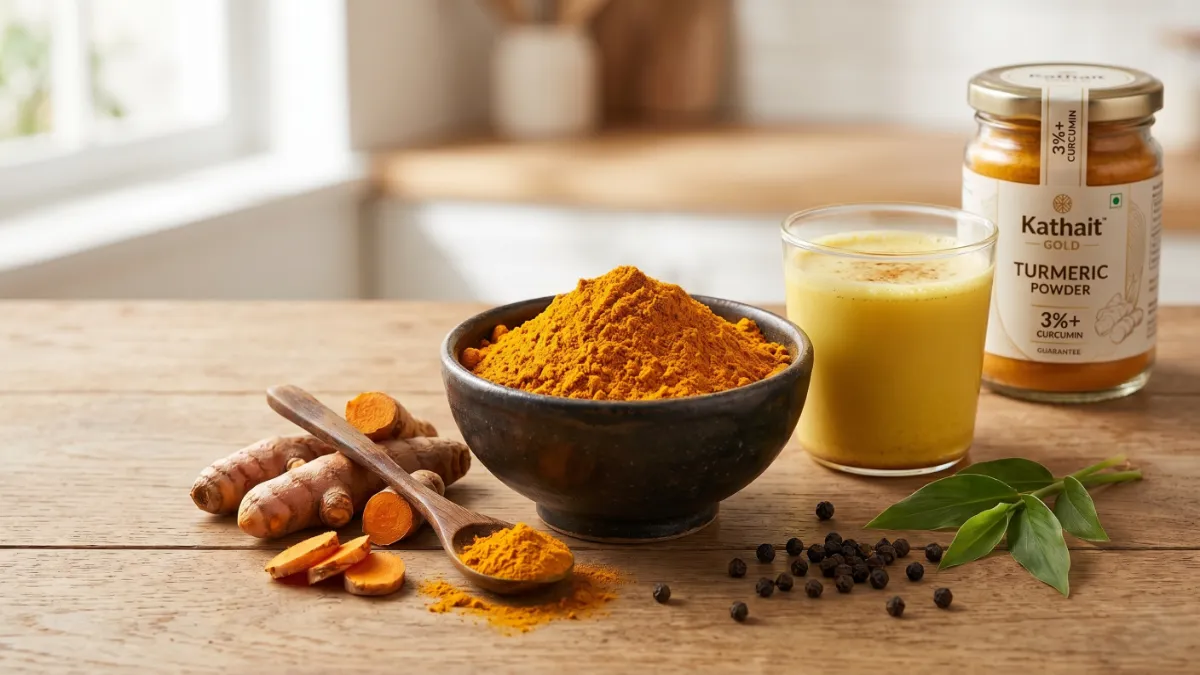
हल्दी (Curcuma longa) अदरक परिवार (Zingiberaceae) का एक बहुवर्षीय पौधा है। इसका मुख्य उपयोग इसके भूमिगत कंद (Rhizome) के कारण किया जाता है। यही कंद उबालने, सुखाने और पीसने के बाद हल्दी पाउडर के रूप में तैयार किया जाता है।
हल्दी का प्राकृतिक रंग पीला से लेकर गहरा सुनहरा नारंगी तक हो सकता है। यह रंग मुख्य रूप से करक्यूमिन (Curcumin) नामक प्राकृतिक यौगिक के कारण होता है। करक्यूमिन ही हल्दी की पहचान और गुणवत्ता का प्रमुख संकेतक माना जाता है।
आज हल्दी केवल एक मसाला नहीं बल्कि भारतीय भोजन संस्कृति का महत्वपूर्ण हिस्सा है। दाल, सब्जी, करी, अचार और अनेक पारंपरिक व्यंजनों में इसका उपयोग किया जाता है।
भारत में हल्दी का इतिहास
भारत में हल्दी का उपयोग लगभग 4000 वर्षों से किया जा रहा है। वैदिक काल से लेकर आधुनिक भारत तक हल्दी ने भोजन, परंपरा और सामाजिक जीवन में महत्वपूर्ण स्थान बनाए रखा है।
प्राचीन भारतीय ग्रंथों में हल्दी को “हरिद्रा” कहा गया है। धार्मिक अनुष्ठानों, विवाह समारोहों और पारंपरिक रीति-रिवाजों में हल्दी का विशेष महत्व रहा है। भारतीय संस्कृति में हल्दी को शुभता, पवित्रता और समृद्धि का प्रतीक माना जाता है।
समय के साथ भारतीय मसालों का व्यापार विश्वभर में फैला और हल्दी वैश्विक स्तर पर सबसे अधिक पहचाने जाने वाले भारतीय मसालों में शामिल हो गई।
भारत विश्व का प्रमुख हल्दी उत्पादक क्यों है?
भारत विश्व का सबसे बड़ा हल्दी उत्पादक, उपभोक्ता और निर्यातक देश है। देश के विभिन्न राज्यों में हल्दी की खेती की जाती है और अनेक क्षेत्रों की मिट्टी एवं जलवायु इसकी खेती के लिए उपयुक्त मानी जाती है।
भारतीय हल्दी अपनी प्राकृतिक रंगत, गुणवत्ता और विविध किस्मों के कारण अंतरराष्ट्रीय बाजार में विशेष पहचान रखती है।
हल्दी की खेती और उत्पादन
हल्दी की खेती मुख्य रूप से गर्म और आर्द्र जलवायु वाले क्षेत्रों में की जाती है। अच्छी जल निकासी वाली मिट्टी और पर्याप्त वर्षा इसकी सफल खेती के लिए महत्वपूर्ण मानी जाती है।
खेती के दौरान पौधों को परिपक्व होने में सामान्यतः 7 से 10 महीने का समय लग सकता है। फसल तैयार होने के बाद कंदों को सावधानीपूर्वक निकाला जाता है।
कटाई के बाद की प्रक्रिया
- कंदों की सफाई
- उबालना या क्योरिंग
- धूप में सुखाना
- पॉलिशिंग
- ग्रेडिंग
- मिलिंग और पिसाई
इन प्रक्रियाओं के बाद तैयार उत्पाद को हल्दी पाउडर के रूप में उपयोग किया जाता है।
करक्यूमिन (Curcumin) क्या है?
करक्यूमिन हल्दी में पाया जाने वाला प्रमुख प्राकृतिक सक्रिय यौगिक है। यही तत्व हल्दी को उसका विशिष्ट पीला रंग प्रदान करता है।
हल्दी की गुणवत्ता का मूल्यांकन करते समय करक्यूमिन प्रतिशत को महत्वपूर्ण माना जाता है। सामान्यतः उच्च गुणवत्ता वाली हल्दी में करक्यूमिन की मात्रा अधिक पाई जाती है।
करक्यूमिन क्यों महत्वपूर्ण माना जाता है?
- हल्दी की प्राकृतिक रंगत का प्रमुख स्रोत
- गुणवत्ता का संकेतक
- हल्दी की बाजार मूल्य निर्धारण में महत्वपूर्ण
- प्रीमियम ग्रेड हल्दी की पहचान में सहायक
प्रीमियम हल्दी और सामान्य हल्दी में अंतर
| विशेषता | प्रीमियम हल्दी | सामान्य हल्दी |
|---|---|---|
| कच्चा माल | चयनित परिपक्व उंगलियां (Finger Rhizomes) | मिश्रित गुणवत्ता |
| रंग | गहरा सुनहरा पीला | हल्का पीला |
| सुगंध | प्राकृतिक और तीव्र | सामान्य |
| करक्यूमिन स्तर | अधिक | कम |
| प्रसंस्करण | नियंत्रित और गुणवत्तापूर्ण | विभिन्न स्तर |
Kathait Gold™ प्रीमियम हल्दी पाउडर
Kathait Gold™ उत्तराखंड आधारित खाद्य ब्रांड है जो शुद्धता, गुणवत्ता और भरोसेमंद खाद्य उत्पादों के निर्माण के लिए प्रतिबद्ध है।
हमारी विनिर्माण गतिविधियां देहरादून स्थित इकाई से संचालित होती हैं। हमारा उद्देश्य उपभोक्ताओं को ऐसे उत्पाद उपलब्ध कराना है जो गुणवत्ता नियंत्रण, स्वच्छ प्रसंस्करण और ग्राहक विश्वास के उच्च मानकों को पूरा करें।
Kathait Gold™ हल्दी पाउडर को तैयार करते समय गुणवत्ता, रंग, सुगंध और उपभोक्ता संतुष्टि पर विशेष ध्यान दिया जाता है।
हल्दी पाउडर कैसे बनाया जाता है?
प्रीमियम गुणवत्ता वाला हल्दी पाउडर केवल अच्छी खेती से ही नहीं बनता, बल्कि पूरी प्रसंस्करण प्रक्रिया उसकी गुणवत्ता को निर्धारित करती है। कच्चे हल्दी कंदों से लेकर अंतिम पैकिंग तक प्रत्येक चरण महत्वपूर्ण होता है।
यदि किसी भी चरण में गुणवत्ता नियंत्रण की अनदेखी की जाए तो रंग, सुगंध, स्वाद और समग्र गुणवत्ता प्रभावित हो सकती है। यही कारण है कि प्रतिष्ठित खाद्य निर्माता पूरी प्रक्रिया पर विशेष ध्यान देते हैं।
हल्दी निर्माण प्रक्रिया के प्रमुख चरण
- कच्चे हल्दी कंदों का चयन
- सफाई और धुलाई
- क्योरिंग (उबालना)
- सुखाना
- ग्रेडिंग और चयन
- पिसाई और प्रसंस्करण
- गुणवत्ता परीक्षण
- पैकेजिंग
चरण 1: कच्चे हल्दी कंदों का चयन
उच्च गुणवत्ता वाली हल्दी की शुरुआत खेत से होती है। प्रीमियम हल्दी पाउडर के लिए अच्छी तरह विकसित और परिपक्व हल्दी कंदों का चयन किया जाता है।
गुणवत्तापूर्ण कच्चे माल से तैयार उत्पाद में बेहतर रंग, सुगंध और समरूपता प्राप्त होती है।
चरण 2: सफाई और धुलाई
कटाई के बाद हल्दी कंदों पर मिट्टी, धूल और अन्य प्राकृतिक अवशेष लगे हो सकते हैं। इन्हें साफ पानी से धोकर स्वच्छ किया जाता है।
यह चरण खाद्य सुरक्षा और स्वच्छता के लिए अत्यंत महत्वपूर्ण माना जाता है।
चरण 3: क्योरिंग (Curing Process)
धुलाई के बाद हल्दी कंदों को नियंत्रित प्रक्रिया के अंतर्गत उबाला जाता है। इस प्रक्रिया को क्योरिंग कहा जाता है।
क्योरिंग का उद्देश्य कच्ची गंध को कम करना और आगे की प्रसंस्करण प्रक्रिया को बेहतर बनाना होता है।
चरण 4: सुखाने की प्रक्रिया
क्योरिंग के बाद हल्दी को पूरी तरह सुखाया जाता है। सुखाने का चरण अत्यंत महत्वपूर्ण है क्योंकि नमी की अधिक मात्रा भंडारण गुणवत्ता को प्रभावित कर सकती है।
उचित रूप से सुखाए गए कंद लंबे समय तक सुरक्षित रखे जा सकते हैं और बेहतर गुणवत्ता वाला पाउडर प्रदान करते हैं।
चरण 5: ग्रेडिंग और चयन
सुखाने के बाद हल्दी कंदों को आकार, रंग और गुणवत्ता के आधार पर अलग-अलग श्रेणियों में वर्गीकृत किया जाता है।
प्रीमियम गुणवत्ता के लिए चयनित कंदों का उपयोग किया जाता है जबकि निम्न गुणवत्ता वाले कंद अलग कर दिए जाते हैं।
चरण 6: हल्दी की पिसाई
पिसाई की प्रक्रिया अंतिम उत्पाद की गुणवत्ता पर सीधा प्रभाव डालती है। इसी चरण में हल्दी कंदों को महीन पाउडर में परिवर्तित किया जाता है।
पारंपरिक पिसाई
पारंपरिक चक्की आधारित पिसाई विधियां लंबे समय से उपयोग में रही हैं। इनका उद्देश्य हल्दी की प्राकृतिक विशेषताओं को यथासंभव सुरक्षित रखना होता है।
आधुनिक Pulverizer तकनीक
आधुनिक खाद्य उद्योग में उच्च क्षमता वाले Pulverizer सिस्टम का उपयोग किया जाता है जो समान कण आकार और बेहतर उत्पादन दक्षता प्रदान करते हैं।
गुणवत्ता नियंत्रण के साथ उपयोग की गई आधुनिक तकनीक उत्पाद की एकरूपता बनाए रखने में सहायता करती है।
Pulverizer और साधारण पिसाई में अंतर
| विशेषता | Pulverizer System | साधारण पिसाई |
|---|---|---|
| कण आकार | अधिक समान | भिन्न हो सकता है |
| उत्पादन क्षमता | उच्च | कम |
| स्थिरता | बेहतर | परिवर्तनशील |
| गुणवत्ता नियंत्रण | अधिक नियंत्रित | सीमित |
Cyclone Grading Technology का महत्व
उन्नत खाद्य प्रसंस्करण प्रणालियों में Cyclone Grading तकनीक का उपयोग उत्पाद की एकरूपता सुनिश्चित करने के लिए किया जाता है।
इस तकनीक के माध्यम से विभिन्न आकार के कणों को नियंत्रित किया जा सकता है, जिससे अंतिम उत्पाद अधिक समान और आकर्षक दिखाई देता है।
गुणवत्ता नियंत्रण क्यों महत्वपूर्ण है?
गुणवत्ता नियंत्रण किसी भी खाद्य उत्पाद की विश्वसनीयता का आधार होता है। उपभोक्ता ऐसे उत्पाद चाहते हैं जो सुरक्षित, स्वच्छ और लगातार समान गुणवत्ता वाले हों।
- कच्चे माल का निरीक्षण
- स्वच्छ प्रसंस्करण
- उचित पैकेजिंग
- नमी नियंत्रण
- रंग और सुगंध की निगरानी
- बैच गुणवत्ता परीक्षण
हल्दी पाउडर में संभावित मिलावट
बाजार में उपलब्ध कुछ निम्न गुणवत्ता वाले उत्पादों में मिलावट की संभावना हो सकती है। इसलिए उपभोक्ताओं को विश्वसनीय ब्रांड और प्रमाणित निर्माताओं को प्राथमिकता देनी चाहिए।
संभावित मिलावट के उदाहरण
- स्टार्च आधारित पदार्थ
- कृत्रिम रंग
- निम्न गुणवत्ता वाला कच्चा माल
- अत्यधिक नमी वाला उत्पाद
घर पर हल्दी की शुद्धता कैसे जांचें?
हालांकि प्रयोगशाला परीक्षण सबसे विश्वसनीय होते हैं, फिर भी कुछ सामान्य घरेलू निरीक्षण गुणवत्ता का प्रारंभिक संकेत दे सकते हैं।
रंग का निरीक्षण
अत्यधिक चमकीला और अस्वाभाविक रंग सावधानी का संकेत हो सकता है।
सुगंध का निरीक्षण
शुद्ध हल्दी में प्राकृतिक और विशिष्ट सुगंध होती है।
पानी परीक्षण
पानी में हल्दी मिलाने पर उसका व्यवहार प्रारंभिक गुणवत्ता संकेत दे सकता है, हालांकि यह पूर्ण वैज्ञानिक परीक्षण का विकल्प नहीं है।
Kathait Gold™ गुणवत्ता मानक
Kathait Gold™ में गुणवत्ता केवल एक प्रक्रिया नहीं बल्कि एक निरंतर प्रतिबद्धता है। हमारा उद्देश्य उपभोक्ताओं को भरोसेमंद खाद्य उत्पाद उपलब्ध कराना है।
हमारी विनिर्माण इकाई नाथूवाला, देहरादून में स्थित है, जहां स्वच्छता, गुणवत्ता नियंत्रण और उत्पाद स्थिरता पर विशेष ध्यान दिया जाता है।
देहरादून, ऋषिकेश, डोईवाला, विकासनगर, मसूरी, पौड़ी, श्रीनगर गढ़वाल, कोटद्वार, टिहरी, रुद्रप्रयाग, चमोली और उत्तरकाशी सहित पूरे गढ़वाल क्षेत्र में गुणवत्तापूर्ण खाद्य उत्पादों की बढ़ती मांग को ध्यान में रखते हुए हम अपने वितरण नेटवर्क को मजबूत करने का प्रयास कर रहे हैं।
संबंधित उपयोगी लेख
स्वस्थ रसोई और गुणवत्तापूर्ण खाद्य उत्पादों के बारे में अधिक जानने के लिए हमारे निम्नलिखित गाइड भी पढ़ें:
- चक्की फ्रेश आटा गाइड
- कच्ची घानी सरसों तेल गाइड
- धनिया पाउडर गाइड
- लाल मिर्च पाउडर गाइड
- कोल्ड प्रेस्ड तेल गाइड
हल्दी पाउडर के प्रमुख पोषण तत्व
हल्दी केवल एक मसाला नहीं है बल्कि अनेक प्राकृतिक यौगिकों से युक्त एक महत्वपूर्ण खाद्य सामग्री है। इसकी गुणवत्ता, रंग, सुगंध और उपयोगिता इसके प्राकृतिक घटकों पर निर्भर करती है।
हल्दी में पाए जाने वाले प्रमुख प्राकृतिक घटकों में करक्यूमिन, आवश्यक तेल, प्राकृतिक रंगद्रव्य और विभिन्न पौध आधारित यौगिक शामिल हैं। यही तत्व हल्दी को उसका विशिष्ट रंग और पहचान प्रदान करते हैं।
| पोषक तत्व | भूमिका |
|---|---|
| करक्यूमिन | हल्दी की पहचान और प्राकृतिक रंग का प्रमुख स्रोत |
| प्राकृतिक आवश्यक तेल | सुगंध और स्वाद में योगदान |
| वनस्पति यौगिक | गुणवत्ता और प्राकृतिक विशेषताओं का हिस्सा |
| प्राकृतिक रेशे | पौधे की संरचना का भाग |
| खनिज तत्व | प्राकृतिक रूप से उपस्थित घटक |
करक्यूमिन क्यों महत्वपूर्ण माना जाता है?
जब भी प्रीमियम हल्दी की बात होती है तो करक्यूमिन का उल्लेख अवश्य किया जाता है। करक्यूमिन हल्दी का सबसे प्रमुख प्राकृतिक सक्रिय यौगिक है जो इसके सुनहरे रंग का मुख्य कारण माना जाता है।
आमतौर पर उच्च गुणवत्ता वाली हल्दी में करक्यूमिन का स्तर बेहतर होता है। यही कारण है कि प्रीमियम हल्दी पाउडर के चयन में करक्यूमिन को महत्वपूर्ण संकेतक माना जाता है।
करक्यूमिन के प्रमुख महत्व
- हल्दी के प्राकृतिक रंग का आधार
- गुणवत्ता मूल्यांकन का प्रमुख संकेतक
- प्रीमियम ग्रेड हल्दी की पहचान
- उच्च गुणवत्ता वाले कच्चे माल का संकेत
हल्दी पाउडर के प्रमुख लाभ
भारतीय भोजन में हल्दी का उपयोग केवल रंग या स्वाद के लिए नहीं किया जाता। यह भारतीय भोजन संस्कृति और परंपरा का अभिन्न हिस्सा रही है।
प्राकृतिक रंग और आकर्षक प्रस्तुति
हल्दी भोजन को आकर्षक सुनहरा रंग प्रदान करती है। दाल, सब्जी, करी और विभिन्न व्यंजनों में इसका उपयोग भोजन की प्रस्तुति को बेहतर बनाता है।
विशिष्ट सुगंध और स्वाद
उच्च गुणवत्ता वाली हल्दी में प्राकृतिक सुगंध और विशिष्ट स्वाद होता है जो भारतीय व्यंजनों की पहचान को मजबूत करता है।
दैनिक उपयोग में बहुउपयोगी
हल्दी लगभग हर भारतीय रसोई में उपयोग की जाने वाली बहुउद्देश्यीय सामग्री है। इसे अनेक व्यंजनों और पारंपरिक घरेलू उपयोगों में शामिल किया जाता है।
भारतीय भोजन संस्कृति का महत्वपूर्ण हिस्सा
भारत के विभिन्न राज्यों में हल्दी का उपयोग क्षेत्रीय व्यंजनों के अनुसार अलग-अलग तरीकों से किया जाता है। उत्तराखंड की रसोई में भी इसका विशेष महत्व है।
भारतीय रसोई में हल्दी का उपयोग
हल्दी भारतीय भोजन की आधारभूत सामग्री मानी जाती है। अधिकांश घरों में लगभग प्रतिदिन इसका उपयोग किया जाता है।
दाल और करी
दालों और करी में हल्दी का उपयोग रंग, स्वाद और पारंपरिक पहचान प्रदान करने के लिए किया जाता है।
सब्जियां
अधिकांश भारतीय सब्जियों में हल्दी एक आवश्यक मसाले के रूप में उपयोग की जाती है।
अचार
अचार निर्माण में हल्दी का विशेष स्थान है। विभिन्न प्रकार के पारंपरिक अचारों में इसका उपयोग किया जाता है।
मसाला मिश्रण
अनेक मसाला मिश्रणों में हल्दी एक आधारभूत घटक के रूप में शामिल रहती है।
उत्तराखंड की रसोई में हल्दी का महत्व
उत्तराखंड के पारंपरिक भोजन में हल्दी का महत्वपूर्ण स्थान है। गढ़वाल और कुमाऊं दोनों क्षेत्रों के अनेक व्यंजनों में इसका नियमित उपयोग किया जाता है।
देहरादून, ऋषिकेश, डोईवाला, विकासनगर, मसूरी, पौड़ी, श्रीनगर गढ़वाल, कोटद्वार और अन्य क्षेत्रों में घरेलू रसोई से लेकर व्यावसायिक भोजनालयों तक हल्दी का व्यापक उपयोग देखा जा सकता है।
हल्दी और भारतीय पारंपरिक जीवनशैली
हल्दी केवल रसोई तक सीमित नहीं है। भारतीय संस्कृति में इसे शुभता और सकारात्मकता का प्रतीक माना गया है।
विवाह समारोहों, धार्मिक अनुष्ठानों और विभिन्न पारंपरिक अवसरों में हल्दी का उपयोग लंबे समय से किया जाता रहा है।
हल्दी का उपयोग खाद्य उद्योग में
आधुनिक खाद्य उद्योग में हल्दी का उपयोग अनेक प्रकार के खाद्य उत्पादों में किया जाता है। इसकी प्राकृतिक रंगत और बहुउपयोगिता इसे खाद्य प्रसंस्करण क्षेत्र में महत्वपूर्ण बनाती है।
- मसाला उद्योग
- रेडी-टू-कुक उत्पाद
- नमकीन उद्योग
- अचार निर्माण
- पारंपरिक खाद्य उत्पाद
- घरेलू उपयोग
प्रीमियम हल्दी और सामान्य हल्दी में अंतर
| मापदंड | प्रीमियम हल्दी | सामान्य हल्दी |
|---|---|---|
| कच्चे माल की गुणवत्ता | चयनित और परिपक्व | मिश्रित गुणवत्ता |
| रंग | गहरा और प्राकृतिक | कम आकर्षक |
| सुगंध | प्राकृतिक और स्पष्ट | हल्की |
| प्रसंस्करण | नियंत्रित गुणवत्ता मानक | भिन्न स्तर |
| उपभोक्ता अनुभव | बेहतर | सामान्य |
देहरादून और गढ़वाल क्षेत्र में प्रीमियम हल्दी की बढ़ती मांग
पिछले कुछ वर्षों में देहरादून और सम्पूर्ण गढ़वाल क्षेत्र में गुणवत्तापूर्ण खाद्य उत्पादों की मांग बढ़ी है। उपभोक्ता अब केवल कीमत नहीं बल्कि उत्पाद की गुणवत्ता, निर्माता की विश्वसनीयता और प्रसंस्करण मानकों को भी महत्व देते हैं।
इसी कारण स्थानीय स्तर पर निर्मित और गुणवत्ता नियंत्रित खाद्य उत्पादों की लोकप्रियता बढ़ रही है।
Kathait Gold™ प्रीमियम हल्दी पाउडर
Kathait Gold™ उत्तराखंड आधारित खाद्य ब्रांड है जिसका उद्देश्य उपभोक्ताओं तक शुद्ध और गुणवत्तापूर्ण खाद्य उत्पाद पहुंचाना है।
हमारी निर्माण इकाई नाथूवाला, देहरादून में स्थित है जहां खाद्य गुणवत्ता, स्वच्छता और उपभोक्ता संतुष्टि पर विशेष ध्यान दिया जाता है।
हम देहरादून, ऋषिकेश, डोईवाला, विकासनगर, मसूरी, पौड़ी, श्रीनगर गढ़वाल, कोटद्वार, टिहरी, रुद्रप्रयाग, चमोली और उत्तरकाशी सहित गढ़वाल क्षेत्र में गुणवत्तापूर्ण खाद्य उत्पादों की उपलब्धता बढ़ाने के लिए निरंतर प्रयासरत हैं।
संबंधित उपयोगी गाइड
- चक्की फ्रेश आटा सम्पूर्ण गाइड
- कच्ची घानी सरसों तेल गाइड
- धनिया पाउडर गाइड
- लाल मिर्च पाउडर गाइड
- कोल्ड प्रेस्ड तेल गाइड
- शुद्ध मसाले खरीदारी गाइड
शुद्ध हल्दी पाउडर खरीदते समय किन बातों का ध्यान रखें?
आज बाजार में सैकड़ों ब्रांड उपलब्ध हैं, लेकिन सभी हल्दी पाउडर समान गुणवत्ता के नहीं होते। एक जागरूक उपभोक्ता को केवल कीमत नहीं बल्कि गुणवत्ता, निर्माता की विश्वसनीयता, प्रसंस्करण प्रणाली और उत्पाद की शुद्धता पर भी ध्यान देना चाहिए।
विशेष रूप से देहरादून, गढ़वाल और उत्तराखंड क्षेत्र के उपभोक्ता अब ऐसे ब्रांडों को प्राथमिकता दे रहे हैं जो पारदर्शिता, गुणवत्ता नियंत्रण और स्थानीय भरोसा प्रदान करते हों।
1. निर्माता की विश्वसनीयता जांचें
हमेशा ऐसे ब्रांड का चयन करें जो अपनी निर्माण इकाई, संपर्क जानकारी और व्यवसायिक विवरण स्पष्ट रूप से साझा करता हो।
- निर्माता का नाम
- FSSAI लाइसेंस
- संपर्क विवरण
- निर्माण इकाई की जानकारी
- बैच और पैकेजिंग विवरण
2. रंग पर ही निर्भर न रहें
बहुत से उपभोक्ता केवल चमकीले रंग को गुणवत्ता का संकेत मान लेते हैं। वास्तव में गुणवत्ता का मूल्यांकन रंग के साथ-साथ सुगंध, प्रसंस्करण और निर्माता की विश्वसनीयता के आधार पर भी किया जाना चाहिए।
3. पैकेजिंग की गुणवत्ता देखें
उचित पैकेजिंग उत्पाद को नमी, धूल और बाहरी प्रदूषण से बचाने में सहायता करती है।
4. ताजगी और भंडारण जानकारी पढ़ें
खरीदारी करते समय निर्माण तिथि, पैकिंग तिथि और भंडारण संबंधी निर्देश अवश्य देखें।
देहरादून और गढ़वाल क्षेत्र में हल्दी पाउडर की मांग
देहरादून, ऋषिकेश, डोईवाला, विकासनगर, मसूरी, पौड़ी, श्रीनगर गढ़वाल, कोटद्वार, टिहरी, रुद्रप्रयाग, चमोली और उत्तरकाशी सहित सम्पूर्ण गढ़वाल क्षेत्र में गुणवत्तापूर्ण मसालों की मांग तेजी से बढ़ रही है।
बढ़ती जागरूकता के कारण उपभोक्ता अब स्थानीय रूप से निर्मित और गुणवत्ता नियंत्रित खाद्य उत्पादों को प्राथमिकता दे रहे हैं।
हमारे सेवा क्षेत्र (Service Areas)
Kathait Gold™ गढ़वाल क्षेत्र के विभिन्न शहरों, कस्बों और ग्रामीण क्षेत्रों तक गुणवत्तापूर्ण खाद्य उत्पाद पहुंचाने के लिए निरंतर कार्य कर रहा है।
- देहरादून
- ऋषिकेश
- डोईवाला
- विकासनगर
- हर्बर्टपुर
- मसूरी
- रायपुर
- प्रेमनगर
- पटेल नगर
- क्लेमेंट टाउन
- नाथूवाला
- हर्रावाला
- जोगीवाला
- नेहरूग्राम
- माजरा
- बल्लूपुर
- पौड़ी
- श्रीनगर गढ़वाल
- कोटद्वार
- नई टिहरी
- देवप्रयाग
- रुद्रप्रयाग
- कर्णप्रयाग
- चमोली
- गोपेश्वर
- उत्तरकाशी
स्थानीय निर्माता से खरीदने के लाभ
स्थानीय खाद्य निर्माता से उत्पाद खरीदने के कई व्यावहारिक लाभ हो सकते हैं।
- बेहतर उपलब्धता
- स्थानीय समर्थन
- तेज आपूर्ति
- सीधा संपर्क
- विश्वसनीय ग्राहक सहायता
- स्थानीय आर्थिक विकास में योगदान
खुदरा (Retail) और थोक (Wholesale) आपूर्ति
हल्दी पाउडर केवल घरेलू उपयोग तक सीमित नहीं है। इसकी मांग खुदरा दुकानों, सुपरमार्केट, होटल, रेस्तरां, कैंटीन, ढाबों और संस्थागत खरीदारों में भी लगातार बनी रहती है।
घरेलू उपभोक्ता
दैनिक उपयोग के लिए गुणवत्तापूर्ण हल्दी पाउडर की आवश्यकता लगभग हर परिवार को होती है।
किराना स्टोर और सुपरमार्केट
खुदरा विक्रेता ऐसे ब्रांडों को प्राथमिकता देते हैं जो गुणवत्ता और नियमित आपूर्ति दोनों प्रदान कर सकें।
होटल और रेस्तरां
होटल, रेस्तरां और भोजनालय बड़ी मात्रा में मसालों का उपयोग करते हैं, इसलिए उनके लिए गुणवत्ता और स्थिरता दोनों महत्वपूर्ण होती हैं।
संस्थागत ग्राहक
कैंटीन, हॉस्टल, आश्रम, कैटरिंग सेवाएं और अन्य संस्थान भी मसालों के महत्वपूर्ण उपभोक्ता हैं।
हल्दी पाउडर का सही भंडारण कैसे करें?
गुणवत्तापूर्ण हल्दी पाउडर की विशेषताओं को बनाए रखने के लिए उचित भंडारण आवश्यक है।
- ठंडी और सूखी जगह पर रखें।
- सीधी धूप से बचाएं।
- हमेशा बंद कंटेनर में रखें।
- नमी से दूर रखें।
- साफ और सूखे चम्मच का उपयोग करें।
Kathait Gold™ हल्दी पाउडर क्यों चुनें?
Kathait Gold™ केवल एक उत्पाद नहीं बल्कि गुणवत्ता और विश्वास का प्रतिनिधित्व करता है। हमारा लक्ष्य उत्तराखंड और विशेष रूप से गढ़वाल क्षेत्र के उपभोक्ताओं तक गुणवत्तापूर्ण खाद्य उत्पाद पहुंचाना है।
| विशेषता | Kathait Gold™ |
|---|---|
| उत्तराखंड आधारित ब्रांड | हाँ |
| स्थानीय विनिर्माण | देहरादून |
| गुणवत्ता नियंत्रण | नियमित |
| स्वच्छ प्रसंस्करण | प्राथमिकता |
| ग्राहक सहायता | उपलब्ध |
हमारी विनिर्माण इकाई
Kathait Gold™ Manufacturing Unit
Ward No. 100,
Gujronwali Road,
Shree Krishna Vihar,
Nathuawala,
Chaktonwala Grant,
Dehradun, Uttarakhand – 248008
यहीं से विभिन्न खाद्य उत्पादों की प्रसंस्करण और पैकेजिंग गतिविधियां संचालित की जाती हैं।
Upfront Enterprise के बारे में
Upfront Enterprise Kathait Gold™ और Hilvera™ जैसे ब्रांडों के माध्यम से खाद्य उत्पादों के निर्माण, पैकेजिंग और विपणन के क्षेत्र में कार्यरत है।
हमारा उद्देश्य उपभोक्ताओं को ऐसे खाद्य उत्पाद उपलब्ध कराना है जो गुणवत्ता, शुद्धता और विश्वसनीयता के मानकों पर खरे उतरें।
संबंधित लेख और उपयोगी गाइड
- चक्की फ्रेश आटा सम्पूर्ण गाइड
- कच्ची घानी सरसों तेल सम्पूर्ण गाइड
- धनिया पाउडर गाइड
- लाल मिर्च पाउडर गाइड
- कोल्ड प्रेस्ड तेल गाइड
- शुद्ध मसाले खरीदारी गाइड
अक्सर पूछे जाने वाले प्रश्न (FAQ)
1. हल्दी पाउडर क्या होता है?
हल्दी के कंदों को साफ करके, सुखाकर और पीसकर तैयार किए गए उत्पाद को हल्दी पाउडर कहा जाता है।
2. करक्यूमिन क्या है?
करक्यूमिन हल्दी में पाया जाने वाला प्राकृतिक सक्रिय यौगिक है जो इसकी विशिष्ट पीली रंगत और गुणवत्ता का प्रमुख संकेतक माना जाता है।
3. प्रीमियम हल्दी और सामान्य हल्दी में क्या अंतर है?
प्रीमियम हल्दी बेहतर कच्चे माल, नियंत्रित प्रसंस्करण और उच्च गुणवत्ता मानकों के साथ तैयार की जाती है।
4. शुद्ध हल्दी पाउडर कैसे पहचानें?
विश्वसनीय निर्माता, उचित पैकेजिंग, प्राकृतिक सुगंध और गुणवत्ता संबंधी जानकारी उत्पाद चयन में सहायता कर सकती है।
5. देहरादून में शुद्ध हल्दी पाउडर कहाँ उपलब्ध है?
स्थानीय किराना स्टोर, वितरकों और अधिकृत बिक्री चैनलों के माध्यम से उपलब्धता प्राप्त की जा सकती है।
6. क्या गढ़वाल क्षेत्र में आपूर्ति उपलब्ध है?
उपलब्ध वितरण नेटवर्क के अनुसार विभिन्न क्षेत्रों में आपूर्ति की जा सकती है।
7. क्या थोक ऑर्डर स्वीकार किए जाते हैं?
हाँ, उपलब्धता और मात्रा के अनुसार थोक ऑर्डर संबंधी जानकारी प्राप्त की जा सकती है।
8. क्या होटल और रेस्तरां के लिए सप्लाई उपलब्ध है?
हाँ, व्यावसायिक ग्राहकों के लिए विशेष आपूर्ति विकल्प उपलब्ध हो सकते हैं।
9. हल्दी पाउडर को कैसे स्टोर करना चाहिए?
इसे ठंडी, सूखी और साफ जगह पर बंद कंटेनर में रखना चाहिए।
10. क्या हल्दी पाउडर का रंग गुणवत्ता का एकमात्र संकेतक है?
नहीं, गुणवत्ता का मूल्यांकन रंग के साथ-साथ सुगंध, निर्माता और प्रसंस्करण के आधार पर भी किया जाना चाहिए।
11. क्या Kathait Gold™ उत्तराखंड का ब्रांड है?
हाँ, Kathait Gold™ उत्तराखंड आधारित खाद्य ब्रांड है।
12. क्या उत्पाद देहरादून में निर्मित होते हैं?
हाँ, Kathait Gold™ की विनिर्माण गतिविधियां देहरादून स्थित इकाई से संचालित होती हैं।
13. क्या हल्दी पाउडर दैनिक उपयोग के लिए उपयुक्त है?
हल्दी भारतीय भोजन में व्यापक रूप से उपयोग किया जाने वाला पारंपरिक मसाला है।
14. क्या Kathait Gold™ अन्य मसाले भी उपलब्ध कराता है?
हाँ, ब्रांड विभिन्न खाद्य और मसाला श्रेणियों में उत्पाद उपलब्ध कराता है।
15. क्या ऑनलाइन जानकारी प्राप्त की जा सकती है?
हाँ, आधिकारिक वेबसाइट और संपर्क माध्यमों से जानकारी प्राप्त की जा सकती है।
उपयोगी बाहरी संसाधन (External Resources)
खाद्य सुरक्षा, कृषि और पोषण संबंधी अतिरिक्त जानकारी के लिए निम्नलिखित संस्थानों की आधिकारिक वेबसाइट उपयोगी हो सकती हैं:
- FSSAI (Food Safety and Standards Authority of India)
- ICAR (Indian Council of Agricultural Research)
- National Institute of Nutrition
हमारे अन्य उपयोगी गाइड
बेहतर खाद्य जानकारी और खरीदारी मार्गदर्शन के लिए निम्नलिखित गाइड भी पढ़ें:
- चक्की फ्रेश आटा सम्पूर्ण गाइड
- कच्ची घानी सरसों तेल सम्पूर्ण गाइड
- धनिया पाउडर गाइड
- लाल मिर्च पाउडर गाइड
- कोल्ड प्रेस्ड तेल गाइड
- शुद्ध मसाले खरीदारी गाइड
संपर्क जानकारी
Upfront Enterprise
58, Ring Road,
Jagriti Vihar,
Danda Dharampur,
Upper Nathanpur,
Dehradun, Uttarakhand – 248014
विनिर्माण इकाई:
Kathait Gold Manufacturing Unit
Ward No. 100, Gujronwali Road,
Shree Krishna Vihar,
Nathuawala,
Chaktonwala Grant,
Dehradun, Uttarakhand – 248008
मोबाइल एवं व्हाट्सएप: +91 9389923509
ईमेल: info@kathaitgold.com
देहरादून, गढ़वाल और उत्तराखंड के लिए गुणवत्तापूर्ण हल्दी पाउडर
यदि आप देहरादून, ऋषिकेश, डोईवाला, विकासनगर, मसूरी, पौड़ी, श्रीनगर गढ़वाल, कोटद्वार, टिहरी, रुद्रप्रयाग, चमोली या उत्तरकाशी में गुणवत्तापूर्ण हल्दी पाउडर की जानकारी खोज रहे हैं, तो यह गाइड आपके लिए उपयोगी संदर्भ प्रदान करती है।
Kathait Gold™ का उद्देश्य उपभोक्ताओं तक गुणवत्ता, शुद्धता और भरोसेमंद खाद्य उत्पाद पहुंचाना है। स्थानीय निर्माण, गुणवत्ता नियंत्रण और ग्राहक संतुष्टि के प्रति हमारी प्रतिबद्धता हमें उत्तराखंड के उभरते खाद्य ब्रांडों में एक विशिष्ट पहचान प्रदान करती है।
निष्कर्ष
हल्दी भारतीय भोजन संस्कृति का अभिन्न हिस्सा है। सही उत्पाद का चयन केवल रंग या कीमत के आधार पर नहीं बल्कि गुणवत्ता, निर्माता की विश्वसनीयता, प्रसंस्करण मानकों और उपभोक्ता विश्वास के आधार पर किया जाना चाहिए।
इस विस्तृत गाइड में हमने हल्दी की उत्पत्ति, करक्यूमिन, निर्माण प्रक्रिया, गुणवत्ता नियंत्रण, शुद्धता पहचान, उपयोग, खरीदारी गाइड और स्थानीय उपलब्धता जैसे महत्वपूर्ण विषयों को शामिल किया है।
Kathait Gold™ उत्तराखंड आधारित खाद्य ब्रांड के रूप में देहरादून और सम्पूर्ण गढ़वाल क्षेत्र में गुणवत्तापूर्ण खाद्य उत्पाद उपलब्ध कराने के लिए निरंतर प्रयासरत है।
🌿 Kathait Gold™ प्रीमियम हल्दी पाउडर
✔ उत्तराखंड आधारित ब्रांड
✔ देहरादून में विनिर्माण इकाई
✔ गुणवत्ता पर विशेष ध्यान
✔ गढ़वाल क्षेत्र में सेवा उपलब्धता
✔ विश्वसनीय खाद्य उत्पाद
अधिक जानकारी के लिए हमसे संपर्क करें।
चक्की फ्रेश आटा देहरादून (Chakki Fresh Atta): शुद्ध और पारंपरिक संपूर्ण गेहूं का आटा
लाल मिर्च पाउडर गाइड: प्रकार, फायदे, SHU, गुणवत्ता और खरीदारी गाइड
हल्दी पाउडर गाइड: शुद्धता, फायदे और खरीदारी