

What Is Chakki Fresh Atta? Complete Guide
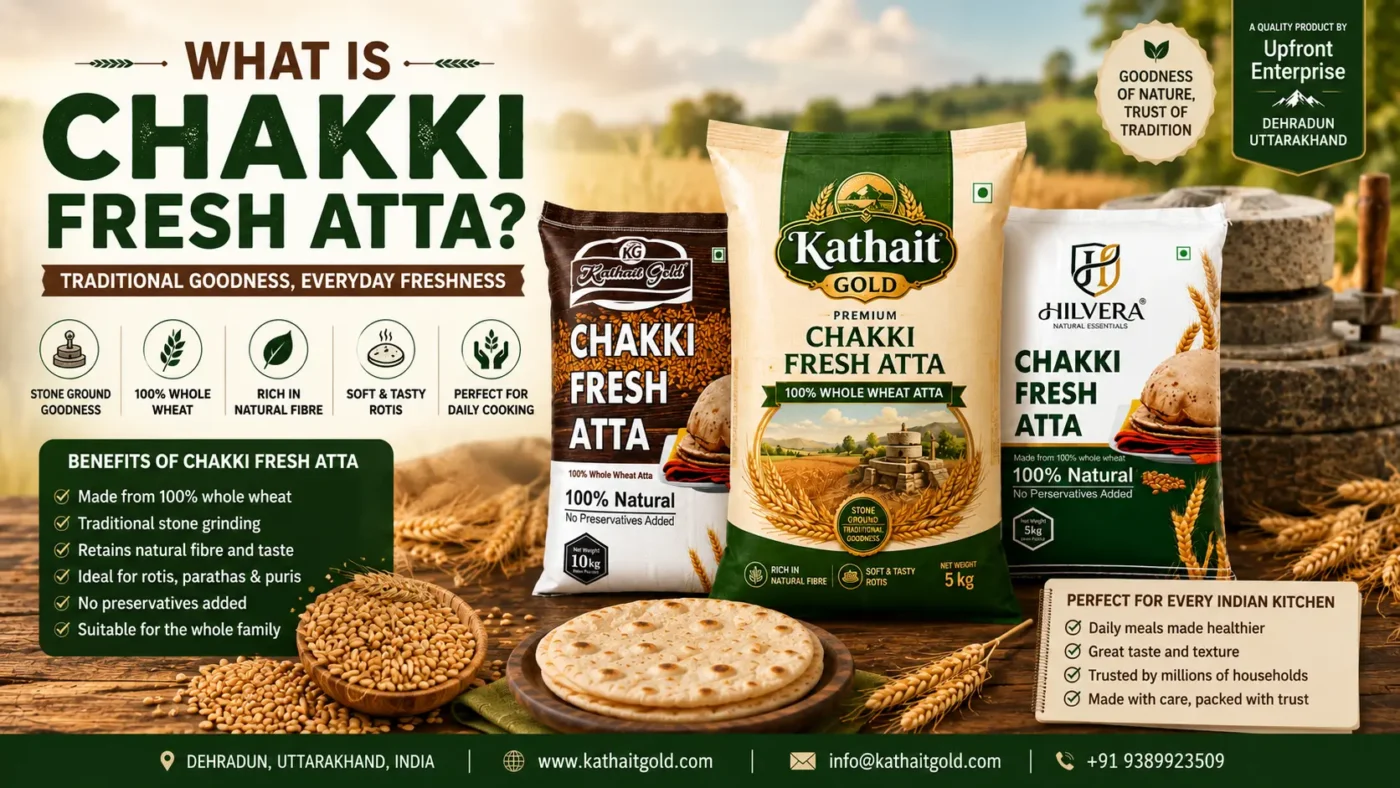
Kathait Gold Chakki Fresh Atta Made From Quality Wheat Using Traditional Stone Grinding Process In Dehradun Uttarakhand

What Is Chakki Fresh Atta? A Complete Guide to Traditional Stone-Ground Wheat Flour in India

What Is Chakki Fresh Atta? This is one of the most common questions asked by households, retailers, distributors, and food-conscious consumers looking for quality wheat flour. Chakki Fresh Atta refers to wheat flour produced through the traditional stone-grinding process, commonly known as a chakki. This method has been widely used across India for generations and remains a preferred choice for preparing daily meals such as chapati, roti, paratha, and other wheat-based foods.

In recent years, consumers have become increasingly interested in understanding where their food comes from, how it is processed, and the quality standards followed during manufacturing. As a result, Chakki Fresh Atta has gained significant attention among families seeking transparency, consistency, and traditional milling methods.

Brands such as Kathait Gold, manufactured by Upfront Enterprise in Dehradun, Uttarakhand, focus on delivering quality food products while maintaining high standards of sourcing, processing, packaging, and customer satisfaction. Alongside Kathait Gold, Hilvera continues to strengthen the commitment toward quality food products designed for modern Indian consumers.

Understanding Chakki Fresh Atta

Chakki Fresh Atta is wheat flour produced by grinding wheat grains using stone mills. Unlike certain industrial milling systems that separate various components during processing, traditional chakki grinding aims to produce flour with a balanced composition suitable for everyday cooking.

The word “chakki” refers to the grinding stone used to mill wheat. For centuries, Indian households relied on local flour mills to grind wheat into fresh atta. Today, modern food manufacturers combine traditional grinding principles with quality control systems to produce packaged Chakki Fresh Atta that meets consumer expectations.

What Makes Chakki Fresh Atta Different?

  • Produced using stone-grinding technology.
  • Designed for daily household consumption.
  • Suitable for chapati, roti, paratha, and other wheat preparations.
  • Widely preferred across urban and rural India.
  • Focuses on maintaining consistency in texture and quality.
  • Available in hygienically packed formats.

The History of Chakki Grinding in India

The tradition of grinding wheat using stone mills dates back thousands of years. Before the development of large-scale industrial flour production, communities depended on local chakki systems to prepare fresh flour according to their daily requirements.

Across North India, including Uttarakhand, Uttar Pradesh, Punjab, Haryana, Rajasthan, and Delhi, wheat has traditionally been a staple food. The demand for fresh flour contributed to the widespread use of local grinding mills that operated within villages and towns.

Although food processing technology has advanced significantly, the popularity of Chakki Fresh Atta remains strong because consumers continue to associate it with traditional food preparation methods and familiar taste profiles.

How Chakki Fresh Atta Is Made

The manufacturing process of Chakki Fresh Atta involves several carefully controlled stages designed to ensure quality, hygiene, and consistency.

1. Wheat Procurement

The process begins with the selection and procurement of quality wheat grains. Manufacturers typically evaluate wheat based on parameters such as cleanliness, grain maturity, moisture levels, and overall suitability for flour production.

2. Cleaning and Sorting

Before grinding, wheat grains undergo cleaning and sorting processes. This stage helps remove dust, impurities, stones, husk particles, and other foreign materials.

3. Conditioning

Conditioning helps prepare the wheat for milling by balancing moisture levels and improving grinding efficiency. Proper conditioning contributes to consistent flour quality.

4. Stone Grinding Process

During stone grinding, wheat grains pass through specially designed grinding stones. The grains are crushed into flour through controlled pressure and rotation.

The objective is to achieve a fine texture suitable for preparing soft and uniform rotis while maintaining consistency throughout production batches.

5. Quality Inspection

After grinding, flour undergoes quality checks to verify texture, appearance, cleanliness, and production standards.

6. Hygienic Packaging

The final flour is packed using food-grade packaging materials designed to maintain freshness and protect the product during storage and transportation.

Why Indian Households Prefer Chakki Fresh Atta

Indian consumers have a long-standing relationship with wheat-based foods. Since roti is a daily staple in millions of homes, flour quality plays an important role in cooking outcomes.

Many households prefer Chakki Fresh Atta because it aligns with traditional food preparation practices while offering the convenience of ready-to-use packaged flour.

Common Reasons for Its Popularity

  • Suitable for daily cooking.
  • Traditional milling approach.
  • Consistent flour texture.
  • Convenient packaged format.
  • Easy availability through retail channels.
  • Compatible with various Indian recipes.
  • Trusted by generations of consumers.

Applications of Chakki Fresh Atta in Indian Kitchens

Chakki Fresh Atta is one of the most versatile ingredients in Indian cooking. It is used across households, restaurants, catering businesses, and food service establishments.

Popular Uses

  • Chapati
  • Roti
  • Paratha
  • Poori
  • Thepla
  • Missi Roti
  • Bakery Applications
  • Traditional Regional Breads

Its adaptability makes it a staple ingredient for families across diverse regions of India.

Understanding Quality in Chakki Fresh Atta

Not all flour products are manufactured using the same standards. Consumers increasingly evaluate products based on transparency, sourcing practices, manufacturing quality, packaging integrity, and brand reputation.

When selecting Chakki Fresh Atta, buyers often consider:

  • Brand credibility.
  • Food safety compliance.
  • Manufacturing standards.
  • Packaging quality.
  • Consistency between batches.
  • Storage and transportation practices.
  • Customer reviews and reputation.

Food manufacturers in India operate under standards established by the Food Safety and Standards Authority of India (FSSAI).

Consumers can learn more about food labeling requirements from the Department of Consumer Affairs.

Information regarding Indian agriculture and wheat production is available from the Ministry of Agriculture & Farmers Welfare.

Growing Demand for Branded Atta Products

The Indian packaged food market has experienced significant growth over the past decade. Consumers increasingly seek products that provide transparency regarding manufacturing, quality assurance, and food safety.

This trend has encouraged food manufacturers to invest in better processing systems, improved packaging technologies, and stronger quality management practices.

As a result, branded Chakki Fresh Atta products have become a preferred choice among urban families, retailers, distributors, and institutional buyers.

Continue to Part 2: Benefits of Chakki Fresh Atta, Chakki vs Roller Flour Comparison, Selection Factors, Storage Practices, and Consumer Buying Considerations.

Benefits of Choosing Chakki Fresh Atta

Chakki Fresh Atta remains one of the most widely consumed flour categories in India because it aligns with traditional cooking habits while offering convenience for modern households. Whether purchased by families, retailers, restaurants, or distributors, quality atta plays an important role in everyday food preparation.

Consumers today are increasingly focused on food quality, manufacturing transparency, and consistency. As a result, Chakki Fresh Atta continues to be a preferred choice across urban and rural markets.

Key Benefits of Chakki Fresh Atta

  • Suitable for daily Indian cooking.
  • Produced using traditional stone-grinding principles.
  • Consistent texture for dough preparation.
  • Easy to use across multiple recipes.
  • Available in hygienically packed formats.
  • Widely accepted by households and commercial kitchens.
  • Convenient storage and handling.
  • Available through local retailers and distributors.

Chakki Fresh Atta vs Roller Flour: Understanding the Difference

Many consumers compare Chakki Fresh Atta with flour produced using roller milling systems. Both methods are widely used in the food industry; however, they differ in processing techniques and consumer perception.

ParameterChakki Fresh AttaRoller Flour
Grinding MethodStone GrindingRoller Milling
Traditional AssociationHighModerate
Consumer FamiliarityVery HighHigh
Usage in Indian HomesExtensiveCommon
Suitability for RotiWidely PreferredDepends on Product Type
AvailabilityVery HighVery High

For many consumers, the decision often comes down to personal preference, cooking style, and trust in a particular brand.

Characteristics of Quality Chakki Fresh Atta

When purchasing packaged atta, consumers should focus on quality indicators rather than price alone. A reliable product is typically supported by strong sourcing, manufacturing, packaging, and distribution systems.

What to Look For

  • Clean and professionally designed packaging.
  • Clearly printed manufacturing details.
  • Batch number and date information.
  • Food-grade packaging materials.
  • Proper storage instructions.
  • Reputed manufacturer or brand.
  • Compliance with food safety regulations.
  • Consistent product appearance.

Why Consistency Matters in Atta Manufacturing

One of the biggest challenges in flour production is maintaining consistency across batches. Retailers, distributors, and consumers expect the same quality every time they purchase a product.

Consistency depends on several factors:

  • Quality of wheat sourcing.
  • Standardized processing methods.
  • Equipment maintenance.
  • Quality control procedures.
  • Packaging standards.
  • Storage conditions.
  • Distribution management.

Brands that invest in these areas are generally better positioned to deliver dependable products throughout the year.

How to Select the Right Chakki Fresh Atta for Your Family

Choosing the right atta involves evaluating several practical factors. Rather than selecting a product solely based on price, consumers should consider overall value, quality assurance, and brand reputation.

Buying Checklist

  1. Check the manufacturer’s details.
  2. Verify packaging integrity.
  3. Review product labeling.
  4. Check manufacturing and packing dates.
  5. Look for food safety compliance information.
  6. Purchase from trusted retailers.
  7. Evaluate consistency after use.
  8. Consider customer feedback and reviews.

Storage Guidelines for Chakki Fresh Atta

Proper storage is essential for maintaining product quality after purchase. Even high-quality atta can be affected by moisture, contamination, or improper handling.

Best Storage Practices

  • Store in a cool and dry place.
  • Keep away from direct sunlight.
  • Use clean and dry storage containers.
  • Close packaging properly after opening.
  • Avoid exposure to moisture.
  • Follow manufacturer recommendations.
  • Rotate stock regularly.

Role of Packaging in Maintaining Product Quality

Packaging serves as the first line of protection for flour products. Modern food-grade packaging helps safeguard the product during transportation, warehousing, retail display, and household storage.

Consumers often overlook packaging quality, but it directly impacts product protection and overall customer experience.

Benefits of Quality Packaging

  • Protects against contamination.
  • Improves transportation safety.
  • Supports product traceability.
  • Enhances shelf presentation.
  • Provides important product information.
  • Helps maintain freshness.

Importance of Food Safety and Compliance

Food safety has become a major priority in the packaged food industry. Consumers increasingly prefer brands that demonstrate transparency and compliance with recognized food manufacturing standards.

Reliable manufacturers invest in:

  • Quality assurance systems.
  • Regular inspections.
  • Hygienic processing environments.
  • Controlled production procedures.
  • Food safety training.
  • Traceability systems.

These practices contribute to greater confidence among consumers, retailers, distributors, and institutional buyers.

Demand for Chakki Fresh Atta in Retail and Distribution Markets

The demand for packaged atta extends beyond households. Retail stores, supermarkets, wholesalers, distributors, hotels, restaurants, caterers, and institutional kitchens rely on quality flour products to meet customer expectations.

As food retail continues to expand across India, demand for trusted atta brands is expected to remain strong. Manufacturers that emphasize consistency, transparency, and customer service are well-positioned for long-term growth.

Consumer Trends Shaping the Atta Industry

The modern food industry is experiencing significant transformation. Today’s consumers are more informed and often seek detailed information about sourcing, manufacturing practices, packaging standards, and brand values.

Current Consumer Preferences

  • Transparency in food production.
  • Trustworthy local brands.
  • Clear labeling and packaging.
  • Food safety compliance.
  • Consistent product quality.
  • Support for regional manufacturers.
  • Convenient availability.

These trends are creating opportunities for emerging brands that prioritize quality and customer satisfaction.

Continue to Part 3: Local SEO Section for Dehradun & Uttarakhand, Supporting Local Manufacturing, Why Choose Kathait Gold Chakki Fresh Atta, Distribution Opportunities, and Internal Linking Strategy.

Chakki Fresh Atta in Dehradun and Uttarakhand

The demand for quality Chakki Fresh Atta continues to grow across Dehradun, Uttarakhand, and other regions of North India. Consumers are increasingly interested in purchasing food products from trusted local manufacturers that maintain transparency in sourcing, processing, packaging, and distribution.

As awareness about food quality increases, households prefer brands that provide clear information about manufacturing locations, quality standards, and business operations. This trend has created significant opportunities for regional food manufacturers that prioritize consistency and customer trust.

Dehradun has emerged as an important center for food processing, packaging, distribution, and retail trade in Uttarakhand. The city’s growing infrastructure, transportation connectivity, and expanding consumer market make it an ideal location for food manufacturing businesses serving both local and regional markets.

Why Supporting Local Food Manufacturers Matters

Choosing products manufactured by local businesses can contribute to regional economic development while strengthening supply chains. Local manufacturing also enables greater transparency because consumers can often learn more about the company, its facilities, and its commitment to quality.

Benefits of Supporting Local Businesses

  • Encourages regional economic growth.
  • Supports local employment opportunities.
  • Strengthens local supply chains.
  • Promotes transparency and accountability.
  • Improves product availability.
  • Builds stronger relationships between brands and consumers.
  • Encourages investment in local manufacturing infrastructure.

For consumers in Uttarakhand and neighboring states, local brands often provide an opportunity to support businesses that contribute directly to the regional economy.

Food Quality and Transparency: What Modern Consumers Expect

Today’s consumers expect more than just a packaged food product. They want confidence in the manufacturer, clarity about production processes, and assurance that quality standards are consistently maintained.

Transparency has become one of the most important factors influencing purchasing decisions. Brands that openly communicate their manufacturing practices, business information, and customer service channels are often viewed more favorably by consumers.

Important Quality Indicators

  • Clearly identified manufacturer.
  • Food safety compliance.
  • Traceable production processes.
  • Professional packaging standards.
  • Customer support availability.
  • Consistent product information.
  • Reliable distribution network.

Introducing Kathait Gold Chakki Fresh Atta

Kathait Gold is a growing food brand committed to delivering quality food products for Indian households, retailers, distributors, and commercial buyers. Manufactured by Upfront Enterprise, the brand focuses on consistency, transparency, and customer satisfaction.

The company’s objective is to combine traditional food values with modern manufacturing and packaging practices. Through careful attention to sourcing, processing, and quality control, Kathait Gold aims to provide products that meet the expectations of today’s consumers.

Whether serving families preparing daily meals or retailers looking for dependable products, Kathait Gold emphasizes quality, reliability, and long-term customer relationships.

Core Brand Values

  • Quality-focused manufacturing.
  • Transparency in operations.
  • Commitment to customer satisfaction.
  • Support for local economic growth.
  • Responsible food processing practices.
  • Continuous improvement.
  • Reliable product availability.

About Upfront Enterprise

Upfront Enterprise is the parent company behind Kathait Gold and Hilvera. The organization is focused on developing trusted food brands that serve households, retailers, distributors, and institutional buyers across India.

Through ongoing investments in manufacturing, packaging, branding, and distribution, the company seeks to strengthen its position within the food products industry while maintaining high standards of business integrity.

Corporate Office

58 Ring Road,
Jagriti Vihar,
Danda Dharampur,
Dehradun, Uttarakhand – 248014

Manufacturing Unit

Shree Krishna Vihar,
Nathuawala,
Dehradun, Uttarakhand

Hilvera and the Future of Food Brands

Hilvera represents another step in the growth and diversification of Upfront Enterprise. The brand reflects the company’s vision of building a strong portfolio of food products designed to meet the evolving needs of modern consumers.

As consumer expectations continue to change, brands must focus on quality, transparency, innovation, and customer trust. Hilvera aims to contribute to this vision by supporting the company’s broader commitment to excellence within the food sector.

Why Retailers and Distributors Prefer Trusted Atta Brands

For retailers and distributors, selecting the right atta brand involves evaluating more than product quality alone. Supply reliability, packaging standards, customer support, and brand reputation also influence purchasing decisions.

What Retailers Look For

  • Consistent product availability.
  • Professional packaging.
  • Reliable manufacturer support.
  • Clear product labeling.
  • Strong consumer demand.
  • Competitive market positioning.
  • Long-term business potential.

Manufacturers that can consistently meet these expectations often build stronger relationships throughout the distribution network.

How Consumers Can Evaluate an Atta Brand

Choosing an atta brand should involve careful evaluation rather than impulse purchasing. Consumers benefit from comparing brands based on quality, transparency, reputation, and overall value.

Evaluation FactorWhy It Matters
Manufacturer InformationImproves transparency and trust.
Packaging QualityProtects product during storage and transport.
Product ConsistencyProvides a dependable cooking experience.
Food Safety ComplianceDemonstrates commitment to standards.
Customer SupportReflects brand accountability.
Market ReputationIndicates long-term reliability.

Internal Linking Opportunities for Topical Authority

To strengthen topical authority and improve website structure, businesses should connect related content through strategic internal linking.

Suggested internal linking anchor texts include:

  • Benefits of Chakki Fresh Atta
  • How Wheat Flour Is Manufactured
  • Difference Between Chakki Atta and Maida
  • Best Atta for Chapati Making
  • How to Store Wheat Flour Properly
  • Guide to Whole Wheat Flour
  • Understanding Food Manufacturing Standards
  • Kathait Gold Food Products
  • Food Manufacturing in Dehradun
  • Choosing Quality Packaged Food Products

Building Trust Through Transparency

Trust is one of the most valuable assets in the food industry. Consumers increasingly prefer brands that communicate openly about their products, manufacturing facilities, quality standards, and customer service channels.

Companies that prioritize transparency often establish stronger long-term relationships with households, retailers, distributors, and business partners.

For this reason, modern food brands are investing in quality assurance systems, professional packaging, consumer education, and responsive customer support.

Growing Opportunities in India’s Packaged Food Sector

India’s packaged food industry continues to expand due to urbanization, changing consumer lifestyles, rising awareness about food quality, and the growing popularity of branded products.

Within this evolving market, Chakki Fresh Atta remains one of the most important staple food categories. Manufacturers that consistently deliver quality products while maintaining transparency and customer trust are positioned to benefit from long-term market growth.

Continue to Part 4: Conclusion, FAQ Section, SEO Assets, Meta Description, Focus Keywords, URL Slug, Social Media Caption, Google Business Profile Post, and Featured Image Prompt.

Conclusion: What Is Chakki Fresh Atta and Why Does It Matter?

What Is Chakki Fresh Atta? In simple terms, it is wheat flour produced using traditional stone-grinding methods that have been trusted by Indian households for generations. Its widespread popularity comes from its suitability for daily cooking, consistent quality, and strong connection to traditional food preparation practices.

As consumers become more aware of food quality, sourcing transparency, and manufacturing standards, choosing products from trusted brands becomes increasingly important. Whether you are a household consumer, retailer, distributor, or food service business, selecting a reliable Chakki Fresh Atta brand helps ensure consistency and confidence in every purchase.

Brands such as Kathait Gold, manufactured by Upfront Enterprise in Dehradun, Uttarakhand, represent the growing strength of local food manufacturing. Through a commitment to quality, transparency, and customer satisfaction, the company aims to provide dependable food products that meet the evolving needs of modern Indian consumers.

As India’s packaged food sector continues to grow, Chakki Fresh Atta will remain an essential staple in kitchens across the country. By understanding the manufacturing process, quality indicators, storage practices, and purchasing considerations, consumers can make informed decisions while supporting responsible food businesses.

Why Choose Kathait Gold Chakki Fresh Atta?

  • Manufactured by Upfront Enterprise.
  • Produced in Dehradun, Uttarakhand.
  • Focus on quality and consistency.
  • Professional packaging standards.
  • Commitment to transparency.
  • Customer-focused business approach.
  • Support for local manufacturing and employment.
  • Growing distribution network.

Contact Information

Brand: Kathait Gold

Brand: Hilvera

Parent Company: Upfront Enterprise

Office Address:
58 Ring Road,
Jagriti Vihar,
Danda Dharampur,
Dehradun, Uttarakhand – 248014

Manufacturing Unit:
Shree Krishna Vihar,
Nathuawala,
Dehradun, Uttarakhand – India

Website: https://kathaitgold.com
Email: info@kathaitgold.com
Phone: +91 9389923509

Frequently Asked Questions (FAQ)

1. What is Chakki Fresh Atta?

Chakki Fresh Atta is wheat flour produced through a traditional stone-grinding process commonly used for preparing chapati, roti, paratha, and other wheat-based foods.

2. Why is it called Chakki Atta?

The term “chakki” refers to the grinding stone used to mill wheat grains into flour.

3. Is Chakki Fresh Atta suitable for daily cooking?

Yes. It is widely used across India for daily household cooking and commercial food preparation.

4. How should Chakki Fresh Atta be stored?

Store it in a cool, dry place in a clean and airtight container away from moisture and direct sunlight.

5. What should consumers check before purchasing atta?

Consumers should review packaging quality, manufacturer details, manufacturing date, product labeling, and overall brand reputation.

6. Why is branded atta becoming more popular?

Branded atta products often provide greater transparency, consistent quality, professional packaging, and reliable customer support.

7. Where is Kathait Gold Chakki Fresh Atta manufactured?

Kathait Gold products are manufactured by Upfront Enterprise in Dehradun, Uttarakhand.

8. Can retailers and distributors work with Kathait Gold?

Businesses interested in distribution or retail partnerships can contact Upfront Enterprise for further information.

Schema Ready FAQ Summary

  • What is Chakki Fresh Atta?
  • Why is it called Chakki Atta?
  • Is Chakki Fresh Atta suitable for daily cooking?
  • How should atta be stored?
  • What should consumers check before purchasing?
  • Why is branded atta popular?
  • Where is Kathait Gold manufactured?
  • How can distributors contact Kathait Gold?

To better understand wheat processing, read our guide on How Wheat Flour Is Made.

Learn more about selecting quality flour in our article on Best Atta for Soft Rotis.

You may also find our detailed guide on Difference Between Atta and Maida useful.

For proper storage practices, read How to Store Wheat Flour Properly.

Explore more food products from Kathait Gold.