

Pure Garhwali Mandua Atta (Ragi Flour / Finger Millet) | Kathait Gold
Quick Summary: Key Takeaways
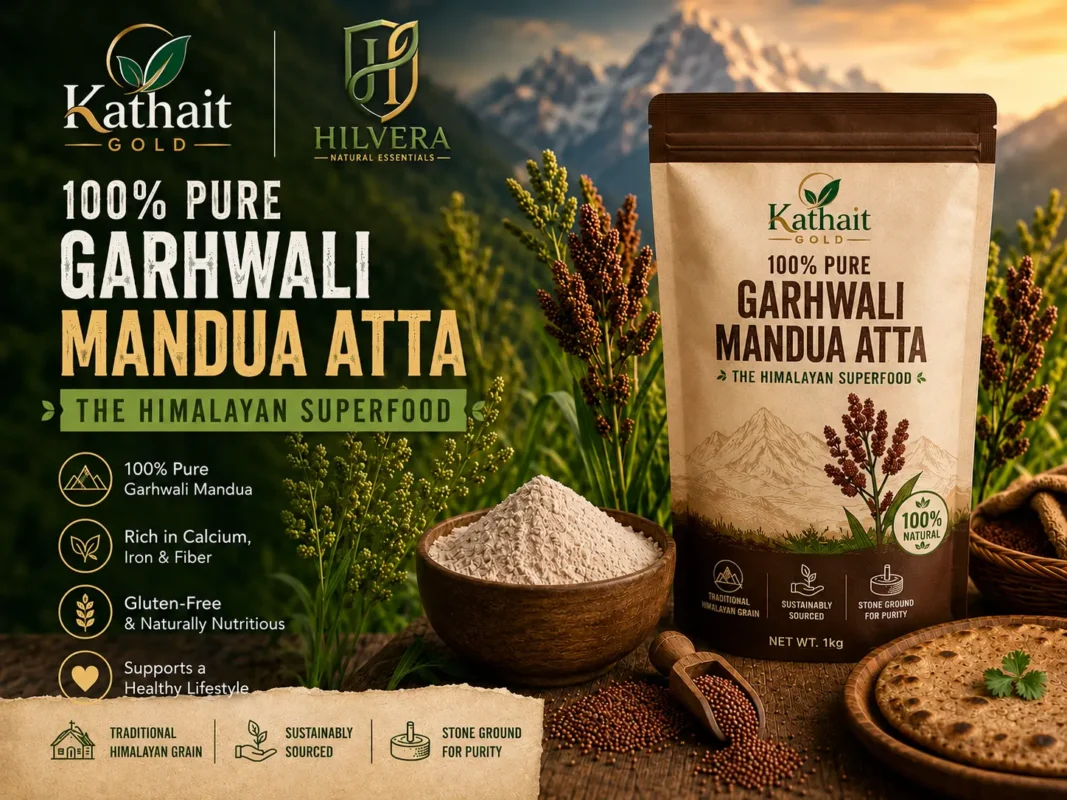
- What It Is: Garhwali Mandua (Finger Millet / Ragi) is an ancient, nutrient-dense Himalayan grain grown traditionally on the mountain slopes of Uttarakhand.
- Calcium Powerhouse: Contains 344 mg of calcium per 100g (nearly 10x more than wheat), making it one of the richest plant sources for bone and teeth health.
- Diabetes & Weight Friendly: Packed with 11.5g dietary fiber and a low Glycemic Index (< 55) to help regulate blood sugar and maintain long-lasting satiety.
- 100% Naturally Gluten-Free: Safe and easily digestible for individuals with celiac disease or wheat sensitivities.
- Cooking Tip for Soft Rotis: Always knead the flour with hot/boiling water to hydrate the starches and achieve soft, pliable flatbreads.
Premium Garhwali Mandua Atta: The Himalayan Finger Millet Superfood Guide
Grown across the sunlit terrace fields and pristine mountain slopes of Uttarakhand, Garhwali Mandua Atta (pure Himalayan Finger Millet flour) represents one of India’s most nutrient-dense ancestral grains. Known botanically as Eleusine coracana and celebrated regionally as Mandua or Koda, this resilient millet has sustained Himalayan farming communities for centuries with its extraordinary mineral and fiber density.
While commonly referred to as Ragi across Southern and Central India, high-altitude Garhwali Mandua develops a distinctive earthy aroma, deeper mineral concentration, and a rich, nutty flavor shaped by Uttarakhand’s unpolluted soil and pure mountain water. At Kathait Gold™ (Upfront Enterprise), our Mandua is directly sourced from traditional mountain farmers and ground using controlled, low-temperature milling to deliver 100% unadulterated purity from the hills to your kitchen.
What Makes High-Altitude Garhwali Mandua Unique?
Unlike intensively farmed lowland millets, Garhwali Mandua thrives in rainfed, terraced mountain soils without synthetic pesticides or chemical growth stimulants. The severe altitude shifts, crisp Himalayan air, and organic mountain compost yield small, rust-colored grains packed with bioavailable micronutrients.
Mandua is naturally climate-resilient, requiring minimal water while restoring soil fertility. When milled into whole grain flour, the dark outer bran layer is fully retained, ensuring an exceptional concentration of dietary polyphenols, insoluble dietary fiber, and plant-based calcium that surpasses nearly all staple cereal grains.
Nutritional Breakdown: Mandua (Finger Millet) vs. Common Grains
Mandua stands out primarily due to its remarkable mineral profile—delivering up to thirty times more calcium than polished white rice and more than three times the dietary fiber of refined wheat flour.
| Nutritional Component (per 100g) | Garhwali Mandua (Ragi) | Whole Wheat Flour (Atta) | Refined White Rice |
|---|---|---|---|
| Energy (kcal) | 328 kcal | 340 kcal | 350 kcal |
| Protein (g) | 7.3 g | 11.8 g | 6.8 g |
| Dietary Fiber (g) | 11.5 g | 10.5 g | 1.3 g |
| Calcium (mg) | 344 mg | 34 mg | 10 mg |
| Iron (mg) | 3.9 mg | 3.5 mg | 0.7 mg |
| Glycemic Index (GI) | Low (< 55) | Moderate (60–65) | High (> 70) |
| Gluten Content | 100% Gluten-Free | Contains Gluten | 100% Gluten-Free |
*Nutritional values referenced from the Indian Food Composition Tables (IFCT), ICMR – National Institute of Nutrition (NIN).
7 Science-Backed Health Benefits of Garhwali Mandua Atta
1. Unmatched Plant-Based Calcium for Bone Density
With roughly 344 mg of natural calcium per 100 grams, Mandua is the highest plant-based source of dietary calcium among common grains. It provides essential skeletal support for growing children, nursing mothers, and seniors prone to osteoporosis or joint stiffness.
2. Exceptional Glycemic Regulation for Diabetes Management
Mandua flour is loaded with complex carbohydrates and water-soluble dietary fiber. Its low glycemic index prevents sharp blood glucose spikes after meals by slowing gastrointestinal absorption, making it a doctor-recommended staple for type-2 diabetes management.
3. 100% Naturally Gluten-Free & Easy to Digest
Mandua is entirely free of gluten proteins, making it safe for individuals with celiac disease, wheat allergies, or irritable bowel syndrome (IBS). It provides a comforting, non-inflammatory alternative to modern hybrid wheat.
4. Rich in Rare Amino Acids (Methionine & Tryptophan)
Most cereal grains are deficient in essential sulfur-containing amino acids. Mandua contains notable levels of Methionine, Tryptophan, and Valine, which aid muscle recovery, cellular tissue repair, and optimal metabolic function.
5. Supports Satiety & Sustainable Weight Management
The high concentration of dietary fiber and slow-digesting resistant starch promotes prolonged fullness. Eating Mandua rotis curtails mid-day hunger pangs and assists in maintaining an effective calorie deficit.
6. Bioavailable Iron to Counter Fatigue and Anemia
Packed with organic iron and essential B-complex vitamins, regular dietary inclusion of Mandua promotes healthy hemoglobin synthesis, combating chronic fatigue and nutritional anemia naturally.
7. Calming Neurochemical Support for Deep Sleep
Tryptophan in finger millet acts as a natural precursor to serotonin and melatonin production in the human body, helping soothe the nervous system, lower cortisol levels, and encourage sound, restorative sleep.
The Kathait Gold™ Processing Standard
When incorporating millets into your daily meals, freshness and purity are paramount. Commercial flours often suffer from long supply chains that degrade delicate lipids or dilute expensive millets with cheaper wheat fillers.
- Direct Mountain Sourcing: Sourced directly from local farmer collectives in the Garhwal belt of Uttarakhand, ensuring fair farmer remuneration and authentic crop provenance.
- Controlled Low-Temperature Milling: Ground in specialized pulverizers and stone mills that maintain milling temperatures below 40°C, preserving heat-sensitive antioxidants, minerals, and natural flavors.
- Zero Adulteration Guarantee: Free from hidden grain blends, starch stabilizers, preservatives, or artificial dyes. Packaged under strict FSSAI food hygiene standards.
Culinary Guide: How to Make Soft Garhwali Mandua ki Roti
Because Mandua flour is naturally gluten-free, it requires hot water hydration (gelatinization of starches) to achieve a soft, rollable dough that stays tender long after cooking.
Recipe Information
- Prep Time: 10 minutes
- Cook Time: 10 minutes
- Total Time: 20 minutes
- Yield: 4 to 5 Rotis
- Dietary Category: Vegetarian, Vegan, Gluten-Free
Ingredients
- 1 cup Kathait Gold™ Premium Mandua Atta
- ¾ to 1 cup Boiling Water (adjust for dough consistency)
- ¼ tsp Himalayan Pink Salt or Rock Salt
- 1 tsp Pure Desi Ghee or Cold Pressed Mustard Oil (optional, for kneading)
Step-by-Step Cooking Instructions
- Boil & Hydrate: In a pan, bring the water and salt to a rolling boil. Turn off the heat, add the Mandua flour, and stir vigorously with a wooden spatula until all flour is evenly moistened.
- Steam & Rest: Cover the pan with a tight lid and allow the mixture to rest for 5 to 7 minutes. This traps steam and activates starch gelatinization.
- Knead Smooth: While the dough is still warm to the touch, transfer it to a flat plate (parat). Apply a few drops of ghee or oil and knead thoroughly for 2–3 minutes until smooth and crack-free.
- Roll Gently: Divide into equal lemon-sized balls. Dust a rolling board with dry Mandua flour and gently roll each ball with light pressure, or pat it out between your palms using parchment paper.
- Cook on Hot Tawa: Place the rolled flatbread on a moderately hot iron tawa. Cook for 30–40 seconds until small bubbles form, flip, and press gently with a clean cloth until the roti puffs up completely.
- Finish & Serve: Remove from flame, brush with fresh desi ghee, and serve hot alongside Garhwali Urad Dal (Chainsoo), Jhol, or fresh green chutney.
Best Practices for Storing Whole Millet Flour
Because whole Mandua retains its nutrient-dense germ and natural oils, it should be stored in an airtight stainless steel or glass container in a cool, dry pantry away from direct sunlight. To ensure maximum aromatic freshness, consume within 45 to 60 days of milling, or refrigerate during humid monsoon weather.
About Kathait Gold™ (Upfront Enterprise)
Kathait Gold™ is a premier FMCG brand dedicated to pure, unrefined, and traditional staple foods produced in Dehradun, Uttarakhand. Our manufacturing unit operates under strict food safety and hygiene protocols.
- Registered Office: 58 Ring Road, Jagriti Vihar, Danda Dharampur, Upper Nathanpur, Dehradun, Uttarakhand – 248014
- Manufacturing Unit: Ward No. 100, Gujronwali Road, Shree Krishna Vihar, Nathuawala, Chaktonwala Grant, Dehradun, Uttarakhand – 248008
- Customer Helpline: +91 93899 23509
- Official Email: info@kathaitgold.com
- FSSAI License No.: 12625005000533 | GSTIN: 05AKJPK8349P4ZB
- Online Store: kathaitgold.com | upfrontstore.in
Mandua Atta (Ragi Flour / Finger Millet): 20 Frequently Asked Questions & Expert Answers
Mandua Atta, traditionally known as Koda in the Garhwal and Kumaon hills of Uttarakhand, is one of the most nutrient-dense ancient grains cultivated in India. Whether you know it as Finger Millet, Ragi in Southern India, or Nachni in Western India, this mineral-rich grain serves as an exceptional dietary staple for bone health, diabetes management, and gluten-free nutrition.
Quick Comparison: Regional Names & Botanical Identity
| Regional Name | Primary Geographic Region | Botanical Name | Key Characteristic |
|---|---|---|---|
| Mandua / Koda | Uttarakhand (Garhwal & Kumaon), Himachal Pradesh | Eleusine coracana | High-altitude mountain grown, deep earthy aroma |
| Ragi | Karnataka, Tamil Nadu, Andhra Pradesh | Eleusine coracana | Staple grain, widely used for mudde and malt |
| Nachni / Nagli | Maharashtra, Gujarat | Eleusine coracana | Popular for bhakri, porridge, and savory snacks |
Top 20 Frequently Asked Questions (FAQ)
1. What is Mandua Atta, and are Mandua, Ragi, and Nachni the exact same grain?
Yes. Mandua, Ragi, and Nachni are different regional Indian names for Finger Millet (Eleusine coracana). In Uttarakhand and the Himalayan belt, it is called Mandua or Koda. In Southern India, it is referred to as Ragi, and across Maharashtra and Gujarat, it is known as Nachni or Nagli. You can explore pure mountain staples via our Kathait Gold Mandua Atta range.
2. What is the nutritional profile of pure Mandua Atta per 100g?
Stone-ground Mandua flour delivers a remarkable concentration of minerals and macronutrients. Every 100g provides:
Calcium: ~344 mg (roughly 3 times that of cow’s milk)
Iron: ~3.9 mg
Dietary Fiber: ~3.6 g to 11 g (retained via traditional stone milling)
Protein: ~7.3 g
Energy: ~336 kcal
3. Is Mandua Atta completely gluten-free?
Yes. Pure finger millet is 100% naturally gluten-free. It contains no gluten proteins, making it an ideal, non-inflammatory grain for individuals managing Celiac disease, wheat sensitivities, or general digestive inflammation.
4. Is Mandua Atta effective for diabetes and blood sugar regulation?
Yes. Mandua has a low-to-moderate Glycemic Index (~54) and a high proportion of soluble dietary fiber along with bioactive polyphenols. This complex matrix slows the breakdown of starches into glucose, preventing post-prandial blood sugar spikes.
5. Why do Mandua rotis tear or break while rolling, and how can they be made soft?
Because Mandua flour contains zero gluten, it lacks the elastic protein binding present in wheat. To make soft, pliable rotis without tearing:
Knead the flour using warm or hot water to gelatinize the natural grain starches.
Cover and rest the dough for 10 minutes before rolling.
Roll gently between two sheets of parchment paper or pat it out flat using damp palms.
6. What is the recommended ratio when mixing Mandua Atta with Chakki Fresh Whole Wheat Flour?
For daily family meals where you want the calcium and mineral density of millets with the soft texture of traditional rotis, a 1:2 or 1:1 blend works best (combining 30% to 50% Mandua flour with 50% to 70% Chakki Fresh Atta). For strict gluten-free diets, use 100% unblended Mandua flour kneaded with hot water.
7. Can Mandua roti be consumed on a daily basis?
Yes. Eating 1 to 2 Mandua rotis daily is safe, highly nourishing, and beneficial for maintaining bone density and sustained metabolic energy. Always maintain regular hydration throughout the day, as high-fiber millets absorb water during digestion.
8. What is the Ayurvedic taseer (nature) of Mandua Atta?
In traditional Ayurvedic dietetics, Mandua/Ragi has a warming taseer (Ushna Virya). This property makes it exceptionally popular during autumn and winter across Uttarakhand for building cold resistance and stamina. In summer, it can be consumed in cooling preparations such as salted buttermilk ragi porridge (Ragi Java).
9. Why is Pahadi Himalayan Mandua from Uttarakhand considered superior?
Pahadi Mandua is cultivated on traditional terrace farms in the mineral-rich Himalayan soil of Uttarakhand under pure rainfed, pesticide-free conditions. This slow high-altitude maturation creates a deeper grain color, richer aroma, and higher micronutrient density compared to intensive commercial plains crops.
10. Is Mandua Atta safe and suitable for babies and toddlers?
Yes. Sprouted Mandua porridge or Ragi malt is widely used across India as an ideal first weaning food for babies aged 6 months and older. Its natural calcium supports rapid bone and teeth development while being easily digestible.
11. How does Mandua Atta assist in weight loss and metabolism?
Mandua is rich in complex carbohydrates, dietary fiber, and the amino acid tryptophan. It digests slowly, suppresses premature hunger pangs, extends satiety, and helps maintain a balanced metabolic rate without insulin fluctuations.
12. Can pregnant and lactating mothers safely consume Mandua Atta?
Yes. The high plant-based calcium content strengthens fetal skeletal development and prevents maternal bone depletion. The rich iron reserves assist in preventing gestational anemia, while traditional preparations help improve lactation volume for nursing mothers.
13. Does Mandua Atta help improve hemoglobin levels and fight iron deficiency?
Yes. Mandua is an excellent natural source of non-heme dietary iron. Pairing Mandua dishes with vitamin C-rich accompaniments—such as lemon, amla chutney, or fresh seasonal vegetables—significantly enhances natural iron absorption in the body.
14. Are there any side effects or precautions with consuming Mandua Atta?
Mandua is safe for general consumption, but overconsuming large quantities without adequate water intake may lead to temporary bloating or constipation due to its dense fiber structure. Individuals with severe kidney ailments should consult their doctor due to the grain’s natural potassium and oxalate content.
15. Can Mandua roti be eaten at night for dinner?
Yes, provided it is eaten in moderate portions (1 roti) and at least 2 hours before going to bed. Because high-fiber ancient grains take longer to digest than refined grains, giving your digestive tract sufficient time ensures deep, restful sleep.
16. Is sprouted Mandua flour more nutritious than regular unsprouted flour?
Sprouting activates natural grain enzymes, breaking down phytates (anti-nutrients). This bio-activation increases the absorption of calcium, iron, and zinc by 20% to 30% and makes the grain even gentler on delicate digestive systems.
17. What dishes can be prepared using Mandua Atta besides standard rotis?
Mandua is extremely versatile in the kitchen. Popular dishes include:
Mandua ki Badi and Garhwali Halwa
Crispy Ragi Dosas and Steamed Ragi Idlis
Savory Mandua Cheela with vegetable fillings
Nutritious morning Ragi Malt / Porridge
Gluten-free Mandua cookies and artisanal breads
18. What is the shelf life of freshly milled Mandua Atta and how should it be stored?
Because stone-ground Mandua retains its natural grain germ and bran oils, it remains fresh for 45 to 60 days when kept in an airtight container in a cool, dry pantry away from direct sunlight. In hot or humid monsoon months, storing the flour in the refrigerator preserves its fresh earthy taste for up to 90 days.
19. How do you verify the purity of Mandua Atta at home?
Pure stone-ground Mandua has an earthy, reddish-grey or dark brown tone, a pleasant mountain aroma, and a slightly textured grain feel. If the flour appears chalky, unnaturally pale, or leaves a chemical aftertaste, it may be mixed with low-grade wheat bran or artificial colorings.
20. Does regular consumption of Mandua Atta help manage cholesterol?
Yes. The soluble dietary fiber and essential amino acids (such as methionine and lecithin) found in finger millet aid in reducing bad LDL cholesterol and triglycerides, promoting long-term cardiovascular health. For complete dietary wellness, explore our Pure Cold Pressed Mustard Oil and healthy staples.