

Multigrain Atta: Complete Guide to Benefits, Nutrition, Ingredients & Daily Use
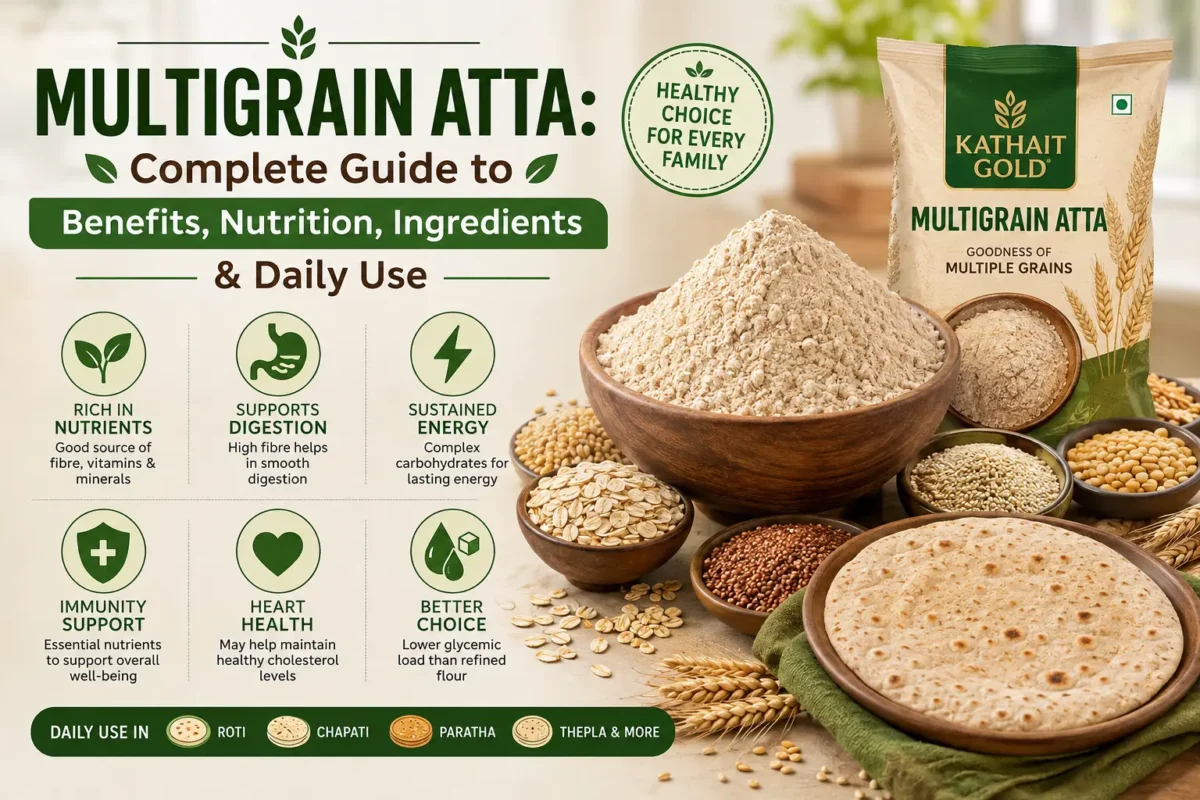
Multigrain Atta: Complete Guide to Benefits, Nutrition, Ingredients & Daily Use
Multigrain atta has become increasingly popular among Indian households looking for variety in their everyday flour. Unlike ordinary wheat flour, multigrain flour can combine wheat with other grains, millets, pulses, or seeds to create a more diverse ingredient profile.
But is multigrain atta actually better than whole wheat atta? Can it be eaten every day? Which ingredients should you look for when buying multigrain flour? And is it suitable for people managing diabetes?
This complete guide explains what multigrain atta is, how it differs from whole wheat atta, what to check on a label, how to use it for roti and chapati, and how to choose a quality product for everyday cooking.
Quick Answer: What Is Multigrain Atta?
Multigrain atta is flour made using two or more grains or grain-like ingredients. Depending on the formulation, it may contain wheat along with ingredients such as jowar, bajra, ragi, oats, barley, maize, pulses, or other grains and seeds.
There is no single standard recipe for multigrain atta. Therefore, the nutritional profile, taste, texture, fibre content, and cooking performance depend on the ingredients and their proportions.
What Is Multigrain Atta?
The word multigrain simply means that multiple grains or cereal ingredients are used. A multigrain flour may therefore offer a wider variety of grain ingredients than a flour made exclusively from wheat.
However, the word “multigrain” by itself does not automatically mean that a product is healthier. The ingredient list matters. A good buying decision should consider the actual grains used, whether they are whole grains, the amount of added ingredients, and the overall nutritional information.
Whole grains retain the bran, germ, and endosperm of the grain. These parts provide fibre and a range of vitamins and minerals.
Multigrain Atta vs Whole Wheat Atta
One of the most common questions is: Which is better, multigrain atta or whole wheat atta?
| Feature | Multigrain Atta | Whole Wheat Atta |
|---|---|---|
| Number of grains | Usually two or more grain ingredients | Primarily wheat |
| Taste | Can have a more complex grain or earthy flavour | Familiar wheat flavour |
| Texture | Depends on the grain combination and milling | Usually familiar wheat-flour texture |
| Cooking | May require adjustment of water and kneading | Generally straightforward for everyday roti |
| Nutrition | Depends on the ingredients and their proportions | Provides the natural nutrients and fibre of whole wheat |
There is no universal winner. For everyday cooking, choose the flour that fits your dietary needs, taste preferences, cooking requirements, and ingredient quality.
Potential Benefits of Multigrain Atta
The benefits of multigrain atta depend heavily on its actual ingredients. When it contains a variety of whole grains, it can be a convenient way to introduce different grain sources into the diet.
1. Greater Grain Variety
Using several grains can add variety to everyday meals. Different grains naturally have different nutrient profiles, flavours, textures, and culinary characteristics.
2. Fibre From Whole-Grain Ingredients
Whole grains can contribute dietary fibre to the diet. Fibre is associated with digestive health and can help with feelings of fullness. The American Diabetes Association recommends choosing minimally processed, higher-quality carbohydrate sources such as whole grains.
3. Convenient Everyday Nutrition
For families that regularly eat roti or chapati, using a carefully formulated multigrain flour can be a practical way to include different grain ingredients without preparing several separate flours.
4. Versatile for Indian Cooking
Depending on the formulation, multigrain atta can be used for rotis, chapatis, parathas, theplas and other Indian flatbreads.
What Ingredients Can Be Found in Multigrain Atta?
There is no universal multigrain recipe. Common ingredients may include:
- Whole wheat
- Jowar (sorghum)
- Bajra (pearl millet)
- Ragi (finger millet)
- Barley
- Oats
- Maize
- Various pulses or legumes
- Seeds, depending on the formulation
Always check the actual product label rather than assuming that every multigrain atta contains the same ingredients.
How to Choose the Best Multigrain Atta
When comparing different brands, don’t choose solely because the package says “multigrain.” Consider these factors:
1. Check the Ingredient List
Look at exactly which grains and ingredients are included. Ideally, the ingredients should be clearly declared and easy to understand.
2. Look for Whole-Grain Ingredients
Whole grains retain the bran, germ and endosperm. They can provide fibre and other nutrients that are reduced when grains are refined.
3. Check the Nutrition Information
Compare dietary fibre, protein, carbohydrates, energy and other declared nutrients between products rather than relying only on marketing claims.
4. Consider Your Cooking Needs
A flour that produces good dough and soft, enjoyable rotis is more likely to become a sustainable part of your everyday diet.
5. Choose Properly Packed Flour
Good packaging, hygienic processing, clear labelling, batch information and appropriate storage instructions are important when buying packaged flour.
Can Multigrain Atta Be Used for Daily Roti?
Yes, multigrain atta can be incorporated into everyday meals when it suits your dietary requirements and preferences.
However, “multigrain” does not mean that portion size becomes irrelevant. Grains and flour still contribute carbohydrates and energy to a meal. A balanced diet should include a variety of foods rather than relying on one ingredient alone.
If you are changing your diet substantially or have a condition requiring specific carbohydrate or nutritional management, consult a qualified healthcare professional or registered dietitian.
Is Multigrain Atta Good for Diabetes?
This is one of the most frequently searched questions, but it needs a careful answer.
Multigrain atta is not a treatment for diabetes. For people with diabetes, the overall meal pattern, carbohydrate quantity, food quality, portion size, activity, medication and individual health needs all matter.
The American Diabetes Association recommends quality carbohydrate sources such as whole grains as part of healthy eating patterns and emphasizes considering portions and overall carbohydrate intake.
Therefore, someone with diabetes should not choose a flour simply because it is labelled “multigrain” or “diabetic-friendly.” Check the ingredient and nutrition information and follow the dietary advice provided by your healthcare professional.
Multigrain Atta vs Jowar Atta
Jowar atta is made primarily from sorghum, while multigrain atta contains multiple grain ingredients.
Jowar can be useful for people who enjoy its distinctive taste and traditional culinary uses. Multigrain atta, on the other hand, provides greater ingredient variety.
The better option depends on your dietary goals, preferred taste, recipe, tolerance and the specific formulation of the flour.
What Are the Disadvantages of Multigrain Atta?
Multigrain atta is not automatically suitable for everyone. Some possible considerations include:
- The taste may be different from traditional wheat atta.
- Different grain combinations can produce different dough textures.
- Some formulations may require more water or different kneading techniques.
- People with specific food allergies or intolerances need to check the ingredients carefully.
- The nutritional quality varies considerably between formulations.
- Some people may experience digestive discomfort when substantially increasing their fibre intake. Increasing fibre gradually and drinking enough fluids can help.
Can You Make Soft Rotis With Multigrain Atta?
Yes, but the result depends on the formulation and preparation method.
For softer rotis:
- Use fresh flour stored correctly.
- Add water gradually while kneading.
- Knead the dough until it becomes smooth and pliable.
- Allow the dough to rest before rolling.
- Avoid using excessive dry flour while rolling.
- Cook the roti properly without overcooking it.
Different grain combinations absorb water differently, so you may need to adjust the amount of water used.
Multigrain Roti: A Practical Everyday Meal
A roti is only one component of a meal. For a balanced plate, combine your roti with vegetables, pulses or another suitable protein source, and other foods appropriate for your dietary needs.
The American Diabetes Association’s plate approach, for example, emphasizes non-starchy vegetables, protein foods and quality carbohydrate sources such as whole grains.
Is Whole Wheat Atta Still a Good Choice?
Absolutely.
Multigrain does not automatically replace whole wheat atta. High-quality whole wheat flour can be an excellent everyday staple, particularly for families who prefer traditional wheat rotis and chapatis.
Whole wheat contains the grain’s bran, germ and endosperm, and therefore retains more of the grain’s natural fibre and nutrients than refined flour.
Hilvera Chakki Fresh Atta: 100% Whole Wheat Flour
For families looking for a straightforward everyday whole wheat option, Hilvera Chakki Fresh Atta is made from carefully selected whole wheat grains and processed using modern milling and grading systems.
According to the product information, Hilvera Chakki Fresh Atta is made from 100% whole wheat, has no added maida, and contains no added preservatives or artificial colours. It is designed for everyday Indian cooking including rotis, chapatis, phulkas and parathas.
It is manufactured and packed by Upfront Enterprise in Dehradun, Uttarakhand.
Explore Hilvera Chakki Fresh Atta →
Frequently Asked Questions About Multigrain Atta
Which multigrain atta is best?
The best multigrain atta depends on the ingredients, their proportions, nutrition information, freshness, processing, packaging and your personal dietary requirements. Look beyond the word “multigrain” and read the ingredient list.
Which is better, multigrain atta or whole wheat atta?
Neither is universally better. Whole wheat atta provides a familiar whole-wheat option, while multigrain atta can provide greater grain variety. Choose according to your nutritional needs, cooking preferences and the specific product formulation.
Can we eat multigrain atta roti daily?
Multigrain roti can be part of a balanced daily diet for many people. Overall diet quality, portion size and individual nutritional needs are important.
Is multigrain atta good for diabetes?
Whole-grain foods can be part of a healthy eating pattern for people with diabetes, but multigrain atta is not a diabetes treatment. People with diabetes should consider carbohydrate portions, the complete meal and their individual medical advice.
What is the healthiest atta for roti?
There is no single healthiest atta for everyone. A minimally processed whole-grain flour that fits your dietary requirements and provides useful nutrition can be a good choice.
Which is better, jowar or multigrain atta?
Jowar atta and multigrain atta have different ingredient profiles. Jowar offers a single-grain sorghum option, while multigrain flour combines multiple ingredients. The right choice depends on your diet and cooking preferences.
What are the disadvantages of multigrain atta?
Potential considerations include variable taste and texture, differences in water absorption, ingredient-specific allergies or intolerances, and digestive discomfort when fibre intake is increased too quickly.
Can multigrain atta be used for chapati?
Yes. Multigrain atta can be used for chapati, roti and other Indian flatbreads. The exact cooking characteristics depend on the flour’s formulation.
Final Verdict
Multigrain atta can be a useful addition to a balanced diet, but the word “multigrain” alone does not guarantee superior nutrition.
The smartest approach is to check the ingredients, prefer whole-grain ingredients where appropriate, compare nutrition information, choose quality packaging, and select a flour that works well with your family’s everyday cooking habits.
For traditional everyday wheat rotis, a quality whole wheat atta such as Hilvera Chakki Fresh Atta can be a practical choice. For those specifically looking for a multigrain formulation, compare the ingredient list and nutrition panel before buying.
Quality ingredients, transparent labelling and balanced eating matter more than marketing claims.
Disclaimer: This article is intended for general educational purposes and is not medical or dietary advice. People with diabetes, food allergies, digestive conditions or other specific nutritional requirements should consult a qualified healthcare professional or registered dietitian before making significant dietary changes.
What Is Multigrain Atta?
Multigrain atta is flour made using two or more grains or grain-based ingredients. Depending on the formulation, it may contain wheat along with ingredients such as jowar, bajra, ragi, barley, oats, maize or other grains.
When choosing multigrain flour, it is important to understand the difference between whole and refined grains. Whole grains retain the bran, germ and endosperm of the grain and can provide dietary fibre and other nutrients.
Potential Benefits of Multigrain Atta
The nutritional benefits of multigrain atta depend on the actual ingredients and their proportions. When a product contains a variety of whole grains, it can be a convenient way to introduce different grain sources into an everyday diet.
Research on whole-grain foods has associated their regular consumption with several aspects of good health. For a detailed overview, see the health benefits of whole grains from Harvard T.H. Chan School of Public Health.
Multigrain Atta and Diabetes: What Should You Know?
Multigrain atta is not a treatment for diabetes. People with diabetes need to consider the overall meal, carbohydrate quantity, portion size, physical activity and individual dietary requirements.
Whole grains can be included in a healthy eating pattern. Harvard T.H. Chan School of Public Health provides additional information about whole grains and type 2 diabetes.
If you have diabetes or another condition requiring specific dietary management, consult a qualified healthcare professional or registered dietitian before making significant dietary changes.
Multigrain Roti: A Practical Everyday Meal
A roti is one part of a complete meal. For a balanced eating pattern, combine quality carbohydrate sources with vegetables, suitable protein sources and other nutritious foods according to your individual needs.
For a practical visual guide to balanced meals, see Harvard T.H. Chan School of Public Health’s Healthy Eating Plate.