

Multigrain Atta vs Whole Wheat Atta: Which Is Better?
Multigrain Atta vs Whole Wheat Atta: Which Is Better?
Multigrain atta vs whole wheat atta is a common question among Indian families choosing flour for everyday roti and chapati. Both can be useful options, but they are not the same.
Whole wheat atta is made primarily from wheat, while multigrain atta combines two or more grains or grain-based ingredients. The right choice depends on the actual ingredients, nutrition profile, cooking characteristics, personal preferences and dietary requirements.
In this guide, we compare multigrain atta and whole wheat atta, explain their key differences, discuss everyday roti preparation, and show what to look for when choosing quality flour.
Quick Answer: Multigrain Atta or Whole Wheat Atta?
Neither is automatically better for everyone.
Choose whole wheat atta if you prefer traditional wheat-based roti, a familiar dough texture and straightforward everyday cooking.
Choose multigrain atta if you want a flour made from a combination of different grains and prefer greater grain variety in your everyday diet.
The most important factor is not simply whether the package says “multigrain.” Check the ingredient list, nutrition information and quality of the actual flour.
What Is Whole Wheat Atta?
Whole wheat atta is flour made from the whole wheat grain. A whole grain contains the bran, germ and endosperm. The bran provides much of the grain’s fibre, while the germ contains various nutrients and the endosperm provides most of the starch.
Traditional whole wheat atta is widely used in Indian cooking for roti, chapati, phulka, paratha and other wheat-based foods.
When buying packaged flour, look at the ingredient declaration and nutrition information rather than relying only on front-of-pack marketing terminology.
What Is Multigrain Atta?
Multigrain atta is flour made using more than one grain or grain-based ingredient.
Depending on the product formulation, it may contain wheat along with grains or millets such as jowar, bajra, ragi, barley, oats or other ingredients.
There is no single universal recipe for multigrain atta. Two products carrying the same “multigrain” description can therefore have significantly different ingredient combinations and nutritional profiles.
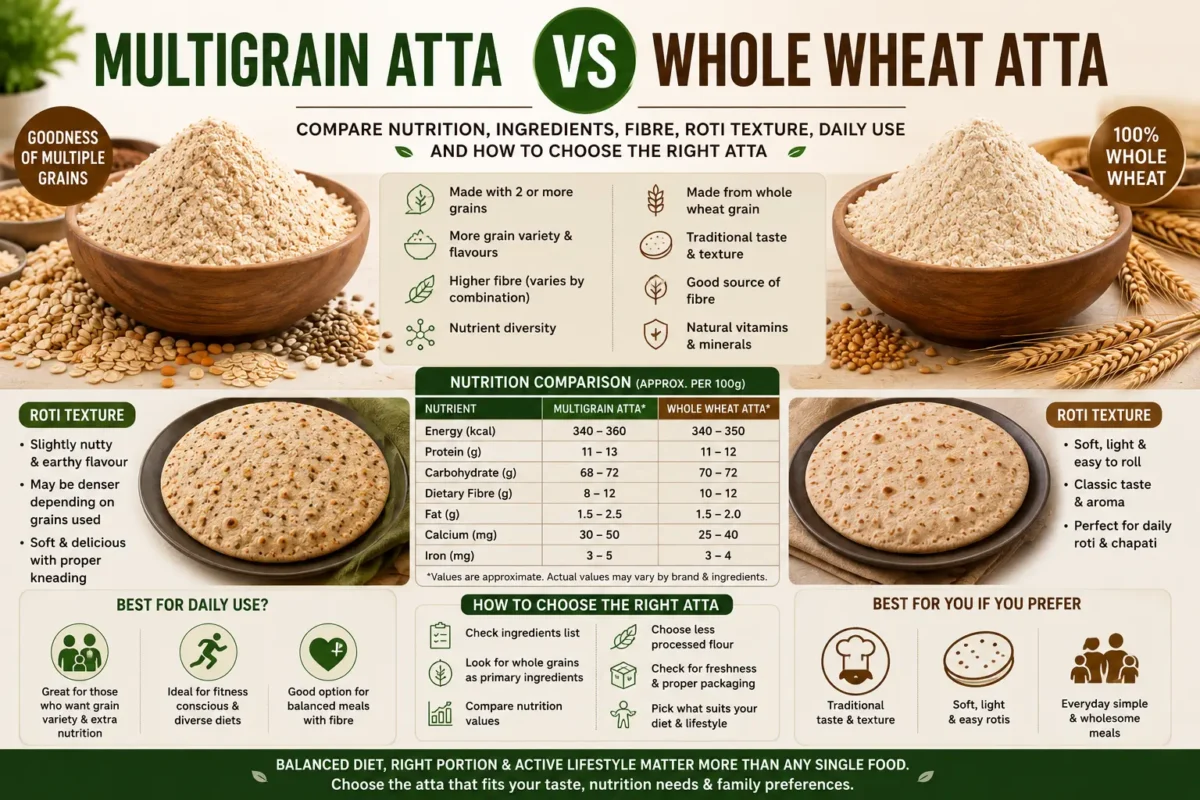
Multigrain Atta vs Whole Wheat Atta: Key Differences
| Feature | Multigrain Atta | Whole Wheat Atta |
|---|---|---|
| Primary composition | Combination of two or more grains or grain ingredients | Whole wheat |
| Grain variety | Usually higher | Primarily wheat |
| Taste | Can have a more complex or earthy flavour | Classic wheat flavour |
| Dough characteristics | Depend on the grain combination | Generally familiar and predictable |
| Roti preparation | May require adjustment of water and kneading | Generally straightforward |
| Nutritional profile | Depends on ingredients and proportions | Based primarily on whole wheat |
| Best suited for | People seeking grain variety | People preferring traditional wheat atta |
Is Multigrain Atta Healthier Than Whole Wheat Atta?
This is where many consumers make an incorrect assumption.
Multigrain does not automatically mean healthier. The nutritional value depends on which grains are included, how much of each ingredient is used, and whether the ingredients are whole grains.
Whole grains retain the bran, germ and endosperm. They can provide dietary fibre and a range of nutrients. The American Diabetes Association recommends quality carbohydrate sources such as whole grains as part of healthy eating patterns.
Therefore, compare the actual ingredient list and nutrition panel instead of choosing a product solely because it has the word “multigrain” on the package.
Multigrain Atta vs Whole Wheat Atta for Roti
For everyday Indian roti, both types of flour can work well.
Whole Wheat Atta for Roti
Whole wheat atta is familiar to most Indian households. It generally produces dough with predictable characteristics and works well for regular roti and chapati preparation.
It is a practical option for families that prefer the traditional taste and texture of wheat roti.
Multigrain Atta for Roti
Multigrain atta can produce a different taste and texture depending on the grains used.
Some combinations may produce a softer dough, while others may require more careful hydration and kneading. The proportions of wheat and other grains can make a significant difference.
For best results, follow the product’s preparation recommendations and adjust water gradually while kneading.
Which Atta Is Better for Daily Use?
For everyday use, consistency and suitability are important.
If your family regularly prepares traditional wheat roti, whole wheat atta may be the simpler choice.
If your family enjoys experimenting with different grains and wants greater grain variety, multigrain atta can be considered.
Neither option needs to be treated as an all-or-nothing choice. The broader quality of the diet matters more than choosing a particular flour based only on marketing terminology.
Whole Wheat Atta and Dietary Fibre
Whole wheat is a whole grain, meaning the bran, germ and endosperm remain part of the grain. Whole grains can provide dietary fibre along with vitamins and minerals.
If you are increasing your fibre intake, it is sensible to do so gradually and maintain adequate fluid intake, particularly if your previous diet was relatively low in fibre.
Multigrain Atta and Diabetes: What Should You Know?
People with diabetes often search for the “best atta for diabetes,” but there is no single flour that is appropriate for every person with diabetes.
Whole grains can form part of a healthy eating pattern. The American Diabetes Association recommends quality carbohydrate sources such as whole grains and emphasizes considering food portions and the overall meal pattern.
Therefore, a multigrain label alone should not be considered a guarantee that a product is suitable for diabetes management.
When choosing flour, consider:
- The actual grain ingredients.
- Whether the ingredients are whole grains.
- Total carbohydrate per serving.
- Dietary fibre.
- Serving and portion size.
- What other foods are included in the meal.
People with diabetes should follow an individualized meal plan from their healthcare professional or registered dietitian, particularly when making significant dietary changes.
Which Is Better for Weight Management?
It is not accurate to say that multigrain atta automatically causes weight loss or that whole wheat atta is automatically better for weight management.
Weight management depends on the overall diet, total energy intake, physical activity, portion sizes and many individual factors.
Foods containing whole grains and fibre can be part of a balanced eating pattern, but the amount eaten and the rest of the meal also matter.
Multigrain Atta vs Whole Wheat Atta: Which Has More Protein?
There is no universal answer.
The protein content of multigrain atta varies according to its ingredients and proportions. Whole wheat atta also has a naturally occurring protein content, but the exact amount varies between wheat varieties, milling and product formulation.
For an accurate comparison, check the protein per 100 g and serving information on the respective product labels.
Which One Makes Softer Chapati?
Softness is affected by several factors, including:
- Flour composition
- Wheat quality
- Grain proportions
- Water absorption
- Kneading technique
- Dough resting time
- Rolling technique
- Cooking temperature and duration
As a result, you cannot reliably determine roti softness simply by choosing multigrain or whole wheat atta.
How to Make Soft Roti With Either Flour
- Place the required flour in a clean mixing bowl.
- Add water gradually rather than all at once.
- Knead until the dough becomes smooth and pliable.
- Allow the dough to rest for approximately 10–20 minutes.
- Knead lightly again before rolling.
- Use moderate heat while cooking the roti.
- Avoid overcooking, which can make the roti dry.
Multigrain formulations can absorb water differently from standard wheat atta, so small adjustments may be necessary.
How to Choose a Good Atta
1. Read the Ingredient List
Don’t select flour based only on words such as “premium,” “healthy,” or “multigrain.” Check what is actually inside the package.
2. Look for Whole-Grain Ingredients
If whole-grain nutrition is important to you, look for whole-grain or whole-wheat ingredients in the ingredient declaration. Whole grains contain the bran, germ and endosperm.
3. Compare Nutrition Panels
Look at dietary fibre, protein, carbohydrates and energy per 100 g or per serving.
4. Check Packaging Information
Choose properly packaged flour with clear product information, batch details, manufacturing information and appropriate storage instructions.
5. Consider Freshness
Flour is a food ingredient, so freshness and appropriate storage are important for maintaining its quality.
Hilvera Chakki Fresh Atta: A Whole Wheat Everyday Option
For consumers who prefer traditional whole wheat flour, Hilvera Chakki Fresh Atta is positioned as an everyday whole wheat atta option.
The product is made from 100% whole wheat and is intended for common Indian preparations such as roti, chapati, phulka and paratha.
For the most accurate current product information, including pack size, ingredients and nutritional details, refer to the product page and packaging.
View Hilvera Chakki Fresh Atta →
Kathait Gold™ Chakki Fresh Atta
Kathait Gold™ also offers a whole wheat atta option for consumers looking for everyday Indian flour.
The brand’s atta range is part of Upfront Enterprise’s broader food manufacturing and FMCG portfolio based in Dehradun, Uttarakhand.
When choosing between products, compare the actual product specifications, ingredients, nutrition information and pack details rather than selecting solely on brand name.
Frequently Asked Questions
Which is better, multigrain atta or whole wheat atta?
Neither is universally better. Whole wheat atta provides a traditional whole-wheat option, while multigrain atta offers a combination of different grains. The better choice depends on the specific formulation and your dietary and cooking preferences.
Is multigrain atta healthier than wheat atta?
Not necessarily. A multigrain product may contain several grains, but its nutritional quality depends on the actual ingredients and their proportions. Whole wheat is itself a whole grain.
Which atta is best for daily use?
A quality whole wheat or multigrain flour can be suitable for everyday use depending on your dietary requirements and preferences. Check the ingredients and nutrition information before choosing.
Which atta is best for roti?
Whole wheat atta is a traditional choice for roti and chapati. Multigrain atta can also be used, although the texture and water requirements may differ depending on its formulation.
Is multigrain atta good for diabetes?
Multigrain atta is not a treatment for diabetes. Whole grains can be part of a healthy eating pattern, but people with diabetes should consider carbohydrate portions and the complete meal and follow individualized professional advice.
Is whole wheat atta good for everyday roti?
Yes. Whole wheat atta is a traditional everyday flour used widely for roti and chapati. It contains the whole wheat grain rather than only the refined endosperm.
Which has more fibre: multigrain or whole wheat atta?
There is no universal answer. Fibre content varies according to the exact ingredients and formulation. Check the nutrition label for an accurate comparison.
Can I mix multigrain atta with whole wheat atta?
Yes, flour blends can be used in home cooking. Start with a smaller proportion of multigrain flour and adjust the water and kneading technique according to the dough’s consistency.
Final Verdict: Multigrain Atta vs Whole Wheat Atta
Multigrain atta and whole wheat atta can both have a place in a balanced diet.
Choose whole wheat atta when you want the familiar taste and cooking characteristics of traditional wheat flour. Choose multigrain atta when you specifically want a combination of different grains.
The most important point is to look beyond the front of the package. Read the ingredient list, compare the nutrition information, consider your cooking needs and select a product that fits your household’s dietary preferences.
For everyday traditional roti, Hilvera Chakki Fresh Atta provides a straightforward whole wheat option, while consumers interested in other grain combinations should compare multigrain formulations carefully.
Good flour selection starts with good information—not simply the word “multigrain” on the package.
Disclaimer: This article is for general educational purposes only and is not medical or individualized dietary advice. People with diabetes, food allergies, digestive conditions or other specific nutritional requirements should consult a qualified healthcare professional or registered dietitian before making significant dietary changes.
Whole wheat is a whole grain that contains the bran, germ and endosperm. These components contribute fibre and other nutrients. For more information, see the Harvard T.H. Chan School of Public Health guide to whole grains.
The nutritional quality of a flour depends on its actual ingredients and processing. Whole grains can provide fibre, vitamins and minerals, and choosing less-processed carbohydrate sources is generally encouraged. The American Diabetes Association guide to carbohydrates provides useful information about whole grains, fibre and carbohydrate quality.
For people managing diabetes, the type and amount of carbohydrate in a meal can matter. The American Diabetes Association’s healthy eating guidance discusses quality carbohydrates, including whole grains, as part of a balanced eating pattern.
Whole grains can be an important source of dietary fibre. For additional information about whole grains, fibre and their nutritional components, refer to Harvard Nutrition Source.