

Which Multigrain Atta Brand Is Best for Diabetes? A Practical Guide
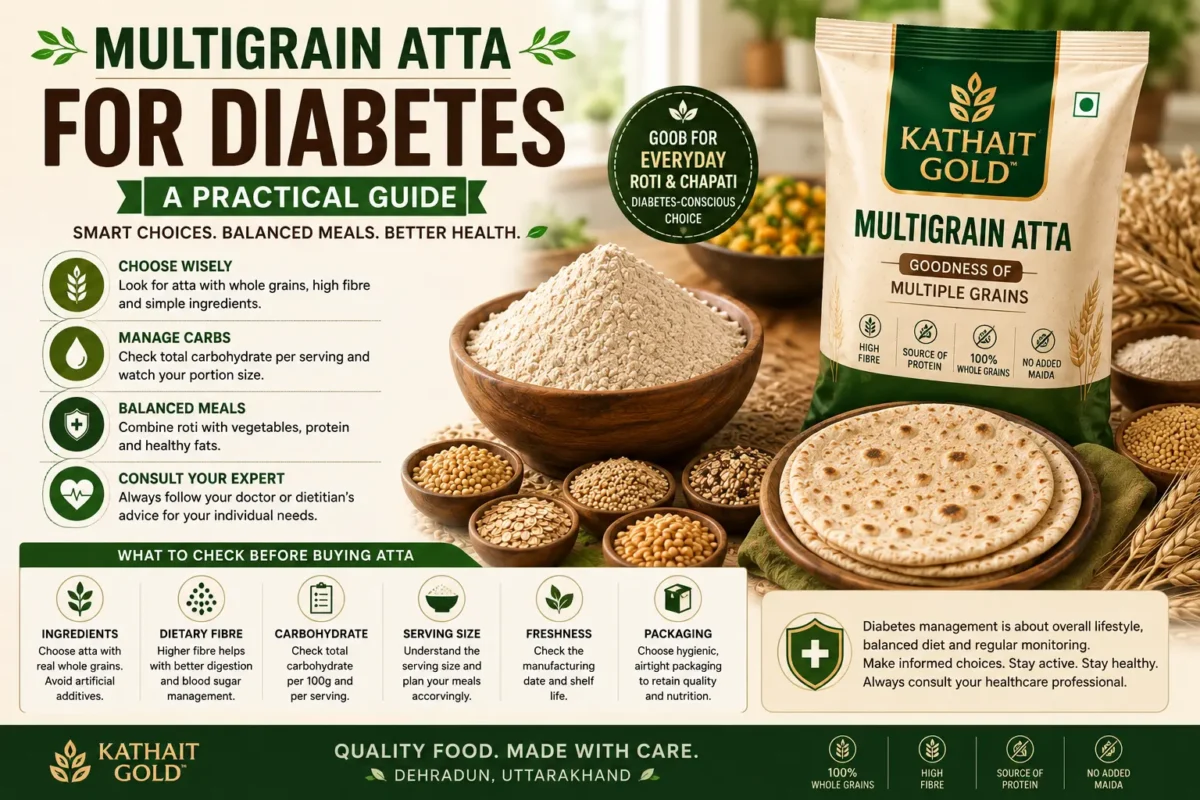
The Ultimate Guide to the Best Multigrain Atta for Diabetes
Which multigrain atta brand is best for diabetes? This is a common question among people looking for better flour choices for everyday roti and chapati.
The important point is that there is no single multigrain atta brand that is medically “best” for everyone with diabetes. A better approach is to compare the ingredient list, total carbohydrate, dietary fibre, serving size, processing and overall meal composition.
Multigrain atta can contain several grains, but the word “multigrain” alone does not tell you how a product will affect your blood glucose. People with diabetes should consider both the quality and quantity of carbohydrate in their meals. The American Diabetes Association recommends quality carbohydrate sources such as whole grains and emphasizes appropriate portions. See the American Diabetes Association’s healthy eating guidance.
Quick Answer: Which Multigrain Atta Is Best for Diabetes?
Rather than choosing a brand based only on the words “multigrain” or “diabetic-friendly,” compare the actual nutrition label and ingredient list.
Look for a flour that:
- Clearly declares its grain ingredients.
- Uses whole-grain ingredients where appropriate.
- Provides useful dietary fibre.
- Clearly states total carbohydrate.
- Does not rely on misleading health claims.
- Fits your individual carbohydrate and meal plan.
The American Diabetes Association explains that people with diabetes can include carbohydrates in a healthy meal plan and that portion size and carbohydrate quality are important considerations.
Does Multigrain Atta Automatically Mean It Is Better for Diabetes?
No.
“Multigrain” simply means that more than one grain or grain-based ingredient is used. It does not automatically mean that the flour is lower in carbohydrate, lower in calories or suitable for every person with diabetes.
Two multigrain atta products can contain very different grain combinations and proportions. One may contain mostly whole wheat with smaller amounts of other grains, while another may use a substantially different formulation.
Therefore, the ingredient list and nutrition information are more useful than the front-of-pack marketing claim.
What Should You Look for in Multigrain Atta for Diabetes?
1. Check the Total Carbohydrate
Flour and roti are carbohydrate-containing foods. The American Diabetes Association explains that total carbohydrate on a nutrition label includes starch, sugar and fibre.
Instead of assuming that multigrain atta is “low carb,” check the actual total carbohydrate value on the product label.
2. Check Dietary Fibre
Whole grains can provide dietary fibre. Fibre is part of carbohydrate but is not digested in the same way as starch and sugar. The ADA notes that fibre can support digestive health and may help with blood glucose management.
When comparing two flour products, look at the declared dietary fibre per 100 g or per serving.
3. Look for Whole-Grain Ingredients
Whole grains contain the bran, germ and endosperm. Whole-grain foods can therefore provide more of the grain’s naturally occurring fibre and nutrients than refined grains.
The ADA recommends choosing whole grains and other minimally processed carbohydrate sources as part of a healthy eating pattern.
4. Read the Complete Ingredient List
Do not choose a flour simply because its package displays several grains.
Check:
- Which grains are included?
- Which ingredient appears first?
- Are the grains whole grain?
- Are there added ingredients?
- Does the product contain ingredients you need to avoid?
5. Check the Serving Size
Nutrition values are meaningful only when you consider how much flour or roti you actually eat.
A product may have a useful nutrition profile per 100 g, but the amount consumed at a meal still contributes to total carbohydrate intake.
Why Portion Size Matters
One of the biggest mistakes is assuming that a healthier type of flour can be eaten without considering quantity.
The ADA explains that starchy foods can be part of a healthy meal plan for people with diabetes, but portion size matters because these foods contain carbohydrates that can raise blood glucose.
Therefore, choosing multigrain atta should be combined with appropriate portion control and a balanced meal.
How to Build a Balanced Meal With Roti
Roti does not need to be eaten alone. A balanced meal can combine a quality carbohydrate source with vegetables and a suitable protein source.
The ADA’s Diabetes Plate method suggests filling approximately half the plate with non-starchy vegetables, one-quarter with lean protein and one-quarter with quality carbohydrate foods such as whole grains.
For an Indian meal, this could mean combining roti with vegetables, dal, beans, paneer or another suitable protein source according to individual dietary requirements.
Multigrain Atta vs Whole Wheat Atta for Diabetes
| Factor | Multigrain Atta | Whole Wheat Atta |
|---|---|---|
| Grain variety | Usually contains multiple grains | Primarily whole wheat |
| Carbohydrate | Depends on formulation | Primarily from wheat |
| Fibre | Depends on ingredients and formulation | Contains fibre from whole wheat |
| Nutrition | Varies between products | Based primarily on whole wheat |
| Roti texture | Depends on grain combination | Generally familiar wheat-roti texture |
| Diabetes suitability | Depends on total diet, portions and individual needs | Also depends on total diet, portions and individual needs |
Neither flour should automatically be called “best for diabetes.” Compare the actual nutrition information and consider how the flour fits into your complete meal plan.
Can People With Diabetes Eat Multigrain Roti?
Yes, multigrain roti can be included in a diabetes-friendly eating pattern for many people.
However, the fact that a roti is made with multiple grains does not make it carbohydrate-free. Flour-based foods still contribute carbohydrate, and the amount eaten matters.
The ADA recommends paying attention to carbohydrate quantity and choosing nutrient-dense carbohydrate sources.
If you use insulin or medication that requires specific carbohydrate management, work with your diabetes care team to determine the appropriate amount for your individual needs.
Is Multigrain Atta Better Than Maida?
Generally, a whole-grain-based flour provides more of the grain’s natural fibre and nutrients than refined flour.
Refining removes the bran and germ, leaving primarily the starchy endosperm. Whole-grain foods retain all three parts of the grain.
However, “multigrain” should not be confused with “whole grain.” Always check the ingredient list to understand the actual product.
Can Multigrain Atta Lower Blood Sugar?
No food should be presented as a guaranteed way to lower blood sugar.
Some higher-fibre and minimally processed carbohydrate foods may have different effects on blood glucose compared with refined carbohydrate foods, but individual responses vary.
Blood glucose management depends on many factors, including food intake, medication, physical activity, stress, sleep and individual health conditions.
If you are monitoring blood glucose, discuss your readings and meal plan with your healthcare professional or diabetes care team.
What About “Diabetic Atta” or “Diabetes-Friendly Atta”?
Be careful with marketing terminology.
A product described as “diabetic atta” does not automatically mean that it has been clinically proven to improve diabetes outcomes.
Instead of relying on the name, examine:
- Ingredients
- Total carbohydrate
- Dietary fibre
- Protein
- Serving size
- Added ingredients
- Nutrition claims
The ADA recommends using nutrition labels to understand and compare packaged foods rather than relying only on marketing language.
How to Compare Two Multigrain Atta Brands
If you are standing in a shop comparing two products, use this simple checklist.
| Check | What to Look For |
|---|---|
| Ingredients | Clearly declared grains and other ingredients |
| Whole grains | Whole-grain ingredients where appropriate |
| Total carbohydrate | Compare per 100 g and serving |
| Dietary fibre | Compare declared fibre content |
| Protein | Compare declared protein |
| Serving size | Understand how much you actually consume |
| Processing | Prefer appropriate, transparent processing information |
| Packaging | Clear manufacturer and product information |
Can Kathait Gold™ or Hilvera™ Atta Be Used by People With Diabetes?
Kathait Gold™ and Hilvera™ offer whole wheat atta products for everyday Indian cooking. However, we do not recommend presenting any flour as a treatment for diabetes or claiming that a particular brand is medically “best” for people with diabetes.
For someone with diabetes, the appropriate product depends on their individual meal plan, carbohydrate needs, portion size and medical advice.
Consumers should check the current product label and nutrition information before making a dietary decision.
View Hilvera Chakki Fresh Atta →
View Kathait Gold™ Chakki Fresh Atta →
Best Way to Eat Roti in a Balanced Diabetes Meal
- Choose a suitable whole-grain or quality flour.
- Keep your roti portion appropriate for your individual meal plan.
- Add plenty of non-starchy vegetables.
- Include an appropriate protein source.
- Limit highly processed foods and added sugars.
- Follow your healthcare professional’s recommendations for carbohydrate intake.
The ADA emphasizes quality carbohydrates, vegetables, protein and portion control as components of healthy meal planning.
Frequently Asked Questions
Which multigrain atta brand is best for diabetes?
There is no single multigrain atta brand that is medically best for everyone with diabetes. Compare the ingredient list, total carbohydrate, dietary fibre, serving size and overall nutrition, and choose according to your individual meal plan.
Can a diabetic patient eat multigrain atta?
Many people with diabetes can include multigrain atta as part of a balanced eating pattern. The amount of carbohydrate and portion size still matter.
Is multigrain atta better than wheat atta for diabetes?
Not automatically. Both can provide carbohydrate, and their nutritional profiles depend on the specific product. Compare the nutrition label rather than assuming multigrain is always better.
Does multigrain atta reduce blood sugar?
No flour should be promoted as a guaranteed blood-sugar-lowering treatment. Individual blood glucose responses vary, and diabetes management involves the overall diet, medication, activity and other factors.
How much multigrain roti can a diabetic person eat?
There is no universal number that applies to everyone. The appropriate amount depends on individual carbohydrate needs, medications, activity level, meal composition and health goals. A diabetes care team or registered dietitian can provide personalized guidance.
Is high-fibre atta better for diabetes?
Fibre-rich whole-grain foods can be part of a healthy eating pattern, but fibre content alone does not determine whether a flour is appropriate. Total carbohydrate, portion size and the complete meal also matter.
What should I check on an atta label for diabetes?
Check the ingredient list, total carbohydrate, dietary fibre, protein, serving size and other declared nutrition information. Also consider how much flour you normally consume.
Is “diabetic atta” always better?
No. The term itself does not guarantee a medical benefit. Compare the actual ingredients and nutrition information rather than relying solely on a marketing claim.
Final Verdict
The best multigrain atta for diabetes is not determined by the brand name alone.
A smarter approach is to choose a product with transparent ingredients, appropriate whole-grain content, useful dietary fibre and clearly declared nutrition information—and then consider the amount you eat as part of your complete meal.
For people with diabetes, there is no need to search for a special “magic” atta. Quality carbohydrate choices, appropriate portions, vegetables, protein and an individualized eating plan are more important.
Read the label, understand the carbohydrate content, watch portions and choose according to your individual dietary needs.
Medical disclaimer: This article is for general educational purposes only and is not medical advice. It does not diagnose, treat, cure or prevent diabetes. People with diabetes should consult their doctor, registered dietitian or qualified diabetes care professional for individualized nutrition and carbohydrate guidance.
Trusted Resources for Diabetes and Nutrition
For additional information about carbohydrates, whole grains, nutrition labels and healthy eating with diabetes, these authoritative resources may be useful: