

Can We Eat Multigrain Atta Roti Daily? Benefits, Nutrition & Expert Tips
Quick Summary: Can We Eat Multigrain Roti Daily?
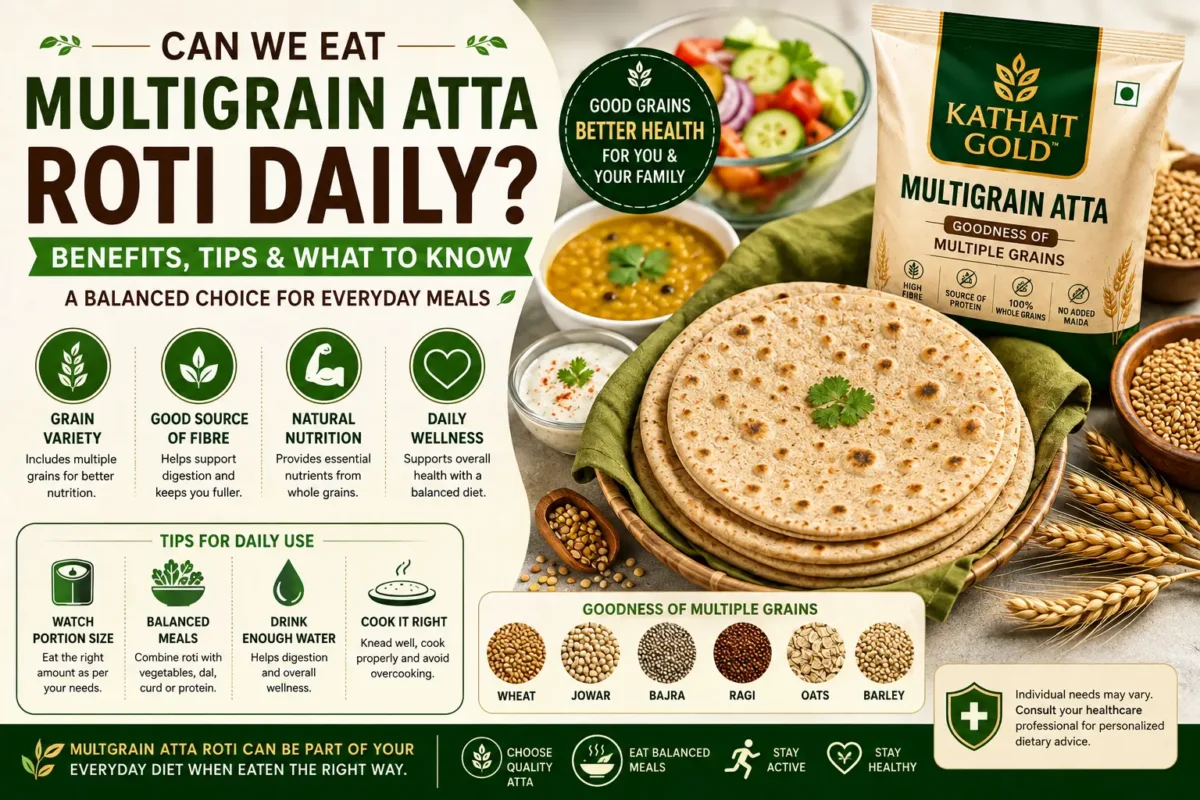
- Everyday Suitability: Yes, multigrain roti is an excellent, nutrient-dense choice for daily family meals when made from pure, unadulterated whole grains.
- Nutritional Edge: Delivers higher plant protein (13–14.5g), increased dietary fiber, and a lower glycemic index (< 55) than standard flours.
- Ideal Composition: Best formulated with a whole wheat base (70%) combined with functional grains like Garhwali Mandua (Ragi), Chana, Jowar, and Oats.
- Diabetes & Weight Control: Helps prevent post-meal blood glucose spikes and sustains fullness longer.
- Tip for Soft Rotis: Use lukewarm water, add 10–15% extra hydration, and let the dough rest for 20 minutes before rolling on a hot tawa.
Can We Eat Multigrain Atta Roti Daily? Benefits, Nutrition & Expert Tips
Can we eat multigrain atta roti daily? For many health-conscious households, switching from traditional single-grain wheat to multigrain flour feels like a natural step toward better nutrition. Multigrain rotis provide an easy way to incorporate diverse millets, ancient grains, and pulses into your daily diet. However, whether eating multigrain roti every day is ideal for your family depends on the grain composition, dietary fiber tolerance, and how it balances with the rest of your meal.
Quick Answer: Is Multigrain Roti Good for Daily Consumption?
Yes, multigrain atta roti can be eaten daily by most healthy individuals as part of a balanced diet.
Eating multigrain roti every day helps increase dietary fiber, delivers varied micronutrients (such as plant-based calcium, magnesium, and B-vitamins), and supports steady blood sugar levels. However, it is not mandatory for everyone: a premium, unadulterated Chakki Fresh Whole Wheat Atta or traditional single-grain flour also provides excellent everyday nutrition.
What Exactly Is Multigrain Atta?
Multigrain atta is flour prepared by blending two or more whole grains, millets, or pulses. A well-formulated commercial or homemade multigrain blend typically uses whole wheat as the primary base (65% to 75%) combined with complementary grains such as:
- Garhwali Mandua / Ragi (Finger Millet): Imparts exceptional plant-based calcium (344 mg/100g) and natural iron.
- Chana / Roasted Bengal Gram: Boosts bioavailable plant protein and lysine.
- Jowar (Sorghum) & Bajra (Pearl Millet): Provides complex carbohydrates, magnesium, and potassium.
- Jau (Barley) & Oats: Contributes soluble beta-glucan fiber to support heart health and cholesterol regulation.
Because there is no single standardized formula for multigrain flour in the market, the nutritional value, texture, and digestibility vary significantly from brand to brand.
Nutritional Comparison: Multigrain vs. Whole Wheat vs. Refined Flour
Evaluating flours side by side highlights how grain diversity enhances micronutrient and fiber density:
| Nutritional Component (per 100g) | Balanced Multigrain Atta | 100% Whole Wheat Atta | Refined Flour (Maida) |
|---|---|---|---|
| Energy (kcal) | 340–348 kcal | 340 kcal | 355 kcal |
| Protein (g) | 13.0–14.5 g | 11.8 g | 9.5 g |
| Dietary Fiber (g) | 11.5–13.5 g | 10.5 g | 1.5 g |
| Calcium (mg) | 75–120 mg | 34 mg | 15 mg |
| Glycemic Index (GI) | Low (< 55) | Moderate (60–65) | High (> 70) |
| Digestive Satiety | Very High (Long-lasting) | High | Low (Rapid Hunger Spikes) |
*Approximate averages referenced from the Indian Food Composition Tables (IFCT), ICMR – National Institute of Nutrition (NIN).
5 Science-Backed Benefits of Eating Multigrain Roti Daily
1. Broad-Spectrum Micronutrient Diversity
Relying exclusively on a single grain can limit your nutrient variety. Blending millets and pulses introduces unique bioactive compounds, antioxidants, and minerals that standard wheat flours contain in lower quantities.
2. Steady Blood Glucose Regulation
The combination of complex carbohydrates and soluble fiber slows the enzymatic breakdown of starch into glucose, preventing sharp post-meal blood sugar spikes. This makes multigrain rotis a preferred staple for managing insulin resistance and type-2 diabetes.
3. Enhanced Digestive Health & Satiety
With up to 13.5 grams of total dietary fiber per 100g, multigrain flour supports regular bowel motility, nurtures healthy gut microbiota, and curbs mid-day hunger cravings to assist in sustainable weight management.
4. Higher Plant Protein Quality
Cereal grains like wheat and millets are naturally limited in the amino acid lysine, while pulses (chana) are rich in lysine. Combining grains and legumes creates a complete amino acid profile for muscle recovery.
5. Easy Kitchen Convenience
A balanced multigrain blend allows families to consume diverse ancient grains without the hassle of milling, storing, and mixing multiple individual flours daily.
Can Eating Multigrain Roti Cause Gas or Bloating?
If your digestive system is accustomed to low-fiber or refined flours, suddenly switching to 100% heavy multigrain rotis three times a day can cause mild bloating, flatulence, or feeling overly heavy. This occurs because the high fiber and complex oligosaccharides ferment in the colon.
How to Transition Smoothly:
- Start Gradually: Begin by replacing only one meal a day with multigrain roti, or mix 30% multigrain atta with 70% Hilvera Whole Wheat Atta.
- Stay Well Hydrated: Dietary fiber requires adequate water to move smoothly through the digestive tract.
- Knead Thoroughly: Allow the dough to rest for at least 20 minutes to soften bran particles.
Is Multigrain Roti Right for Specific Dietary Needs?
For Weight Loss
Multigrain atta does not cause weight loss by itself, but its high fiber content promotes sustained fullness, making it easier to maintain a healthy calorie deficit without energy crashes.
For Diabetes Management
Multigrain rotis have a lower glycemic impact than regular wheat or white rice. However, portion control remains essential. Pair your rotis with fiber-rich green vegetables, salad, and lean protein (dal, paneer, or curd) rather than eating excessive flatbreads alone.
For Children & Seniors
Growing children and elderly family members can enjoy multigrain rotis provided the dough is kneaded soft. For toddlers or individuals with sensitive stomachs, single-grain whole wheat or easy-to-digest pure Mandua porridge may be gentler on the digestive system.
How to Make Soft, Puffy Multigrain Rotis Every Day
Because millets (like ragi and jowar) do not contain gluten, multigrain flour absorbs more moisture and can dry out quickly if not kneaded properly.
- Use Lukewarm Water: Lukewarm water helps soften the dense millet fibers and activates wheat gluten.
- Add Water Gradually: Multigrain dough requires roughly 10% to 15% more water than standard wheat atta.
- Rest the Dough (Crucial): Cover the dough with a moist cloth for 15 to 20 minutes. This resting phase allows complete starch hydration and ensures the rotis roll without cracking.
- Cook on Medium-High Flame: Cook on a pre-heated tawa for 30–40 seconds per side. Avoid slow cooking on low heat, which draws out moisture and makes rotis stiff and chewy.
- Finish with Ghee: Lightly brush with pure desi ghee or cold-pressed mustard oil to lock in surface moisture.
Multigrain Atta vs. Whole Wheat Atta: Which Should You Choose?
Choosing between multigrain and whole wheat is a matter of personal dietary goals:
- Choose Multigrain Atta: If you are managing blood sugar, seeking weight control, or wanting diverse grains and higher fiber in your daily diet.
- Choose 100% Whole Wheat Atta: If you prefer traditional, ultra-soft chapatis with familiar taste, seamless dough handling, and easy daily digestion. Explore our detailed guide: Multigrain Atta vs. Whole Wheat Atta Comparison.
Everyday Flours from Upfront Enterprise
At our licensed processing facility in Dehradun, Uttarakhand, we specialize in low-temperature, stoneless pulverizer milling that preserves 100% natural wheat germ and dietary bran without chemical additives:
- Kathait Gold™ Chakki Fresh Whole Wheat Atta (10kg): Premium whole wheat flour for naturally sweet, soft daily rotis.
- Hilvera™ Whole Wheat Chakki Atta: Budget-friendly, wholesome everyday atta designed for consistent daily cooking.
- Kathait Gold™ Garhwali Mandua Atta (Ragi): 100% pure Himalayan Finger Millet flour for high-calcium, gluten-free rotis.
Final Verdict
Multigrain atta roti is a nutritious, wholesome choice for daily meals when prepared from pure, unadulterated whole grains. Ensure the flour contains clearly declared ingredients without refined fillers, adjust portions to your lifestyle, and complement your rotis with plenty of seasonal vegetables and proteins for a complete, healthy diet.
Disclaimer: This article is for general educational purposes only and is not a substitute for professional medical or dietary advice. Individuals with celiac disease, severe IBS, or specific therapeutic carbohydrate limits should consult a doctor or registered dietitian.
FAQ
Can we eat multigrain atta roti daily?
Yes. Multigrain atta roti can be consumed daily as part of a balanced diet. It provides broad-spectrum nutrient diversity, higher dietary fiber, and plant-based proteins compared to single-grain flours, supporting long-term digestive and metabolic health.
What are the main benefits of eating multigrain roti every day?
Eating multigrain roti daily offers multiple health advantages: it provides sustained energy, prevents rapid blood sugar spikes due to its low glycemic index, promotes gut health through dietary fiber, supports muscle maintenance with higher plant protein, and delivers essential minerals like calcium, iron, and magnesium.
How many multigrain rotis should an adult eat per meal?
For most healthy adults, 2 to 3 medium-sized multigrain rotis per meal paired with seasonal vegetables, dal, curd, or salad provide an ideal balance of complex carbohydrates, dietary fiber, and protein. Portion sizes can be adjusted based on your physical activity levels and dietary goals.
Is multigrain roti suitable for people with diabetes?
Yes. Because multigrain atta combines whole wheat with low-GI millets and pulses (such as Ragi, Jowar, and Chana), it slows down glucose absorption and helps prevent sharp post-meal blood sugar spikes. However, total meal portion control remains essential.
Does eating multigrain roti help with weight loss?
Multigrain roti does not cause weight loss on its own, but its high soluble and insoluble fiber content promotes prolonged satiety and curbs unnecessary snacking. This makes it easier to maintain a calorie deficit without experiencing energy crashes.
Can multigrain atta cause gas, bloating, or digestive discomfort?
If your body is not accustomed to high-fiber flours, a sudden switch can cause temporary bloating or gas. To prevent this, transition gradually by mixing 30% multigrain atta with 70% whole wheat flour, drink plenty of water throughout the day, and let the dough rest for 20 minutes before rolling.
What is the ideal ratio and combination for healthy multigrain atta?
A balanced, easy-to-digest ratio is 70% whole wheat atta combined with 10% Garhwali Mandua (Ragi), 10% roasted chana (Bengal gram) flour, and 10% Jowar or Barley (Jau) flour. This formulation maintains easy dough rolling while delivering rich protein and mineral diversity.
Why do multigrain rotis become hard or dry after cooking?
Because millets lack gluten and absorb more water than wheat, dough prepared with insufficient hydration or dough cooked over low heat dries out quickly. To keep rotis soft, knead with lukewarm water (using 10–15% more water than wheat), rest the dough for 20 minutes, and cook over medium-high heat on a hot tawa.
Is multigrain atta safe and healthy for young children?
Yes, for older children who eat regular family meals, multigrain roti is a great source of natural minerals and protein. However, because of their high fiber density, rotis should be rolled soft and thin, and combined with healthy fats like pure desi ghee for easier digestion and growth energy.
Can elderly individuals eat multigrain roti daily?
Yes, provided they have no specific digestive sensitivities. The rich plant-based calcium from millets like Mandua (Ragi) helps support bone density in seniors, while dietary fiber prevents chronic constipation. The dough should be kneaded extra soft for comfortable chewing and digestion.
Is multigrain atta 100% gluten-free?
No. Most traditional multigrain atta blends use whole wheat or barley as their primary base (which contains gluten to allow dough binding and rolling). People with celiac disease or severe gluten intolerance must opt for certified 100% gluten-free single flours (such as pure Mandua/Ragi, Jowar, or Bajra).
How should I store multigrain atta to prevent it from turning bitter?
Because whole millets and whole wheat retain their nutrient-rich germ and natural oils, multigrain flour is more sensitive to oxidation. Store it in a clean, airtight stainless-steel or glass container in a cool, dry pantry away from direct sunlight, and consume within 45 to 60 days of milling.