

Why Kachi Ghani Mustard Oil Foams and Smells Strong: Science Explained
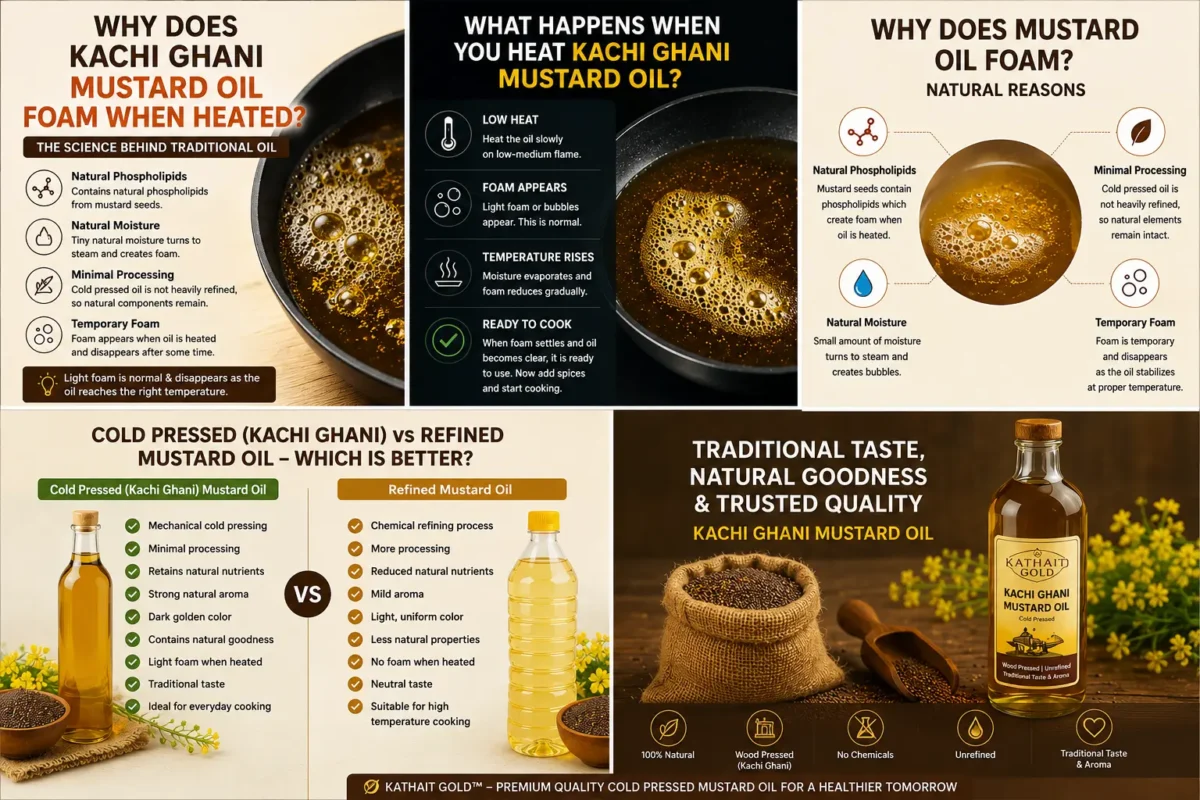
Traditional Kachi Ghani mustard oil retains a strong aroma and forms light foam when heated due to minimal processing. Cold pressing preserves naturally occurring enzymes and glucosinolates that form Allyl Isothiocyanate. Additionally, trace moisture and plant phospholipids cause temporary surface foaming during heating.
Unlike heavily refined oils, cold-pressed mustard oil avoids high-temperature deodorization and chemical extraction. While these natural characteristics reflect minimal processing, overall oil quality depends on seed selection, hygienic manufacturing, proper storage, and compliance with food safety standards.
If you have ever poured authentic Kachi Ghani Mustard Oil into a hot kadhai, you have likely noticed two immediate reactions: a sharp, eye-watering pungent aroma filling the kitchen, and a fine, temporary layer of white froth or bubbles forming on the surface. For cooks accustomed to odorless, pale refined oils, this behavior often raises concerns: Is the oil adulterated? Has it gone bad? Why does mustard oil foam when heated?
In traditional Indian cooking, these characteristics are not defects. Rather, they are natural biochemical hallmarks of authentic, unrefined cold-pressed mustard oil. Understanding the natural food science behind mustard extraction explains why pure virgin oils behave differently from chemically refined cooking oils.
1. What Is Authentic Kachi Ghani Mustard Oil?
The term “Kachi Ghani” translates to cold pressing. In traditional oil processing, clean black or yellow mustard seeds (Brassica juncea or Brassica nigra) are crushed under progressive mechanical compaction using low-speed screw expellers without external heat or chemical solvent extraction.
Unlike industrial solvent extraction that relies on chemical solvents (such as hexane) and extreme thermal refining (>200°C), traditional mechanical pressing maintains barrel temperatures strictly below 49°C. This low-temperature extraction preserves natural antioxidants, fat-soluble vitamins (Vitamin E), natural plant sterols, and the volatile essential oils that give mustard its culinary identity.
True Kachi Ghani extraction is a physical compaction process that extracts virgin oil without bleaching, chemical degumming, or artificial deodorization.
2. Why Does Pure Mustard Oil Have Such a Strong, Pungent Aroma?
The sharp, sinus-clearing aroma (locally known as Jhanjh) of raw mustard oil is not an added fragrance. It is the result of a natural plant defense mechanism triggered during crushing.
Intact, unbroken mustard seeds have virtually no smell. The characteristic pungency develops through a rapid biochemical reaction:
- Glucosinolates (Sinigrin): Mustard seed cellular vacuoles naturally contain sulfur-rich compounds called glucosinolates.
- The Myrosinase Enzyme: In separate plant cells, the seed houses an active enzyme called myrosinase.
- The Enzymatic Reaction: When the seeds are crushed during cold pressing, cellular walls break, allowing myrosinase to mix with glucosinolates in the presence of natural seed moisture.
- Formation of AITC: This hydrolysis reaction instantly synthesizes Allyl Isothiocyanate (AITC)—a volatile, naturally pungent organic compound responsible for the signature aroma and antimicrobial potency of pure mustard oil.
Because virgin cold-pressed oil does not undergo high-temperature vacuum deodorization, this volatile AITC remains completely intact in the bottled oil.
3. Why Does Kachi Ghani Mustard Oil Foam During Heating?
Foaming during the initial heating stage is a normal physical property of unrefined, cold-pressed seed oils. Three distinct natural factors cause this surface bubbling:
A. Natural Plant Phospholipids (Plant Gums)
Whole mustard seeds naturally contain beneficial plant lipids called phospholipids (including natural lecithin). In industrial refined oils, these compounds are aggressively removed using industrial acid-degumming treatments. In unrefined virgin mustard oil, these natural phospholipids are retained. When heated, they temporarily alter the oil’s surface tension, creating small, fine surface bubbles.
B. Micro-Steam Release from Trace Seed Moisture
Quality mustard seeds are conditioned to an optimal 7% to 9% moisture content before cold pressing. Even after sedimentation and mechanical cloth filtration, virgin oil retains minute trace levels of natural moisture. When heated above 100°C, these microscopic water droplets vaporize into steam, rising to the surface as a light, temporary white froth before dissipating completely.
C. Micro-Colloidal Seed Proteins
Cold-pressed extraction expresses pure oil alongside microscopic, soluble seed nutrients. As the oil heats up, these natural protein micro-particles rise to the surface before stabilizing at cooking temperatures.
4. When Is Foaming Normal vs. A Quality Concern?
It is important to distinguish between natural cold-pressed froth and abnormal foaming:
- Normal Foaming: A light, fine layer of white foam that appears during initial heating and gradually settles down as the oil reaches its cooking temperature.
- Abnormal Foaming (Signs of Degradation): Thick, dark, or sticky foam that rises continuously, overflows the pan, fails to dissipate, or is accompanied by an acrid, chemical, or rancid odor. This indicates moisture contamination, old degraded oil, or improper re-use of burnt oil.
5. Cold-Pressed vs. Refined Mustard Oil: Comparative Breakdown
The differences in aroma, color, and pan behavior stem directly from the manufacturing process:
| Quality Parameter | Traditional Cold-Pressed (Kachi Ghani) | Commercial Refined Oil |
|---|---|---|
| Extraction Method | Mechanical screw compaction (<49°C) | Hexane chemical solvent extraction |
| Chemical Refining | Zero chemicals (100% mechanical) | Acid degumming, caustic soda neutralization |
| Natural Aroma (AITC) | Strong, sharp, and naturally pungent | Odorless / Neutral (steam stripped at 220°C) |
| Surface Foaming | Light, temporary natural froth | Zero foam (due to chemical anti-foaming agents) |
| Color & Clarity | Deep golden-amber, rich viscosity | Pale yellow, thinned through bleaching earth |
| Nutrient Retention | Preserves Vitamin E, MUFA, Omega-3 & 6 | Nutrients stripped; requires synthetic fortification |
6. Best Culinary Practice: How to Cook with Mustard Oil
To maximize flavor and achieve the best culinary results, traditional Indian cooking follows a specific heating protocol:
- Heat Gradually: Pour the required quantity of cold-pressed mustard oil into a dry, clean kadhai or pan. Heat over medium flame rather than high heat.
- Allow the Foam to Settle: As the oil warms past 100°C, trace moisture evaporates, and the light surface foam settles.
- Look for the First Wisp of Smoke: Allow the oil to reach its light smoke point (approximately 240°C–250°C), where the sharpest raw pungency mellows into a rich, nutty flavor.
- Lower Flame Before Adding Spices: Reduce the heat for 10–15 seconds before adding cumin, mustard seeds, or whole spices to prevent burning your tadka.
- Avoid Reheating Multiple Times: Never repeatedly re-fry in leftover used oil, as excessive thermal cycles degrade fatty acids in any cooking medium.
7. Four Common Myths About Mustard Oil Debunked
Myth 1: “Surface foam means the oil is mixed with chemicals.”
Fact: The opposite is true. Natural foaming is proof of unrefined, chemical-free extraction where natural seed phospholipids have not been stripped by industrial degumming agents.
Myth 2: “Strong aroma indicates artificial pungent additives.”
Fact: Pure mustard seeds naturally synthesize Allyl Isothiocyanate when cold-pressed. Commercial adulteration typically dilutes pungency rather than creating it.
Myth 3: “Colorless and odorless oils are healthier.”
Fact: Odorless refined oils achieve their neutral profile through high-heat bleaching and chemical deodorization, which destroys natural antioxidants and polyphenols.
Myth 4: “Mustard oil should look identical across every batch.”
Fact: Because mustard is an agricultural crop, variations in seasonal rainfall, winter temperatures, and regional seed varieties (such as Rajasthan Rayda) cause natural, harmless batch variations in color and pungency.
8. The Kathait Gold™ Sourcing & Processing Standard
At our licensed manufacturing facility in Nathuawala, Dehradun, Kathait Gold™ (Upfront Enterprise) adheres to strict food purity principles:
- Premium Rajasthan Rayda Seeds: We source bold, high-oil-content black mustard seeds celebrated for superior natural pungency and stable fatty acid profiles.
- Continuous Screw Expeller Compaction: Mechanical cold-press expellers maintain operating temperatures strictly below 49°C, preventing thermal degradation.
- Zero Chemical Solvents: Clarified through natural sedimentation and multi-stage food-grade filter presses without bleaching earth or chemical solvents.
- Licensed Compliance: Produced under strict food safety and hygiene protocols certified under FSSAI License No. 12625005000533 and registered under GSTIN: 05AKJPK8349P4ZB.
Explore our pure product range: Kathait Gold Cold-Pressed Black Mustard Oil | Chakki Fresh Whole Wheat Atta | Pure Indian Spices.
Summary Verdict
The pungent aroma and light surface foaming of Kachi Ghani Mustard Oil are direct indicators of genuine, minimally processed cold pressing. By preserving natural Allyl Isothiocyanate and seed phospholipids, traditionally extracted mustard oil retains its authentic culinary performance, long-lasting preservation qualities, and rich nutritional value for everyday Indian cooking.
Disclaimer: This article is published for general educational purposes and culinary information only. Individuals with specific dietary limitations or health conditions should consult a qualified physician or registered dietitian.
References & Further Reading
The information presented in this article is intended for educational purposes and is based on traditional food processing practices, publicly available regulatory guidance, and general food science principles. Readers interested in learning more about edible oils, food safety, agricultural practices, and quality standards can refer to the following official resources:
Food Safety and Standards Authority of India (FSSAI)
The Food Safety and Standards Authority of India (FSSAI) is the national regulatory body responsible for establishing food safety standards, licensing food businesses, and promoting safe food practices across India. Consumers can explore official guidelines, food safety regulations, and educational resources related to edible oils and packaged foods.
Visit: https://www.fssai.gov.in/
Ministry of Agriculture & Farmers Welfare, Government of India
The Ministry of Agriculture & Farmers Welfare provides information on Indian agriculture, oilseed cultivation, crop production, farmer welfare programmes, and agricultural policies. It is a valuable source for understanding the cultivation and importance of mustard as an oilseed crop in India.
Visit: https://agriwelfare.gov.in/
Indian Council of Agricultural Research (ICAR)
The Indian Council of Agricultural Research (ICAR) is India’s premier agricultural research organization. ICAR conducts scientific research on crops, food production, agricultural technologies, and sustainable farming practices, including research related to oilseed crops such as mustard.
Visit: https://icar.org.in/
FAQ
Why does Kachi Ghani mustard oil foam when heated in a pan?
A: Cold-pressed mustard oil foams during initial heating because it retains natural seed phospholipids (lecithin) and trace moisture. As the oil heats up, moisture evaporates into micro-steam and phospholipids temporarily alter surface tension, creating a light froth that naturally settles down.
Is strong-smelling mustard oil safe for daily cooking?
A: Yes. The pungent aroma comes from Allyl Isothiocyanate (AITC), a natural compound formed when mustard seeds are crushed. It is completely safe, highly valued in traditional Indian cooking, and possesses natural antimicrobial properties.
How can I tell if mustard oil foaming is normal or bad?
A: Normal cold-pressed foaming is a light, white surface froth that disappears as the oil reaches cooking temperature. Abnormal foaming is thick, sticky, rises continuously without settling, or smells rancid and acrid, indicating degraded, reused, or spoiled oil.
Should I heat mustard oil to its smoking point before adding food?
A: Yes. Heating mustard oil gradually until a light wisp of smoke appears allows the raw, sharp pungency to mellow into a rich, nutty flavor. Always lower the flame for a few seconds before adding whole spices so they do not burn.
Does cold weather make pure mustard oil cloudy?
A: Yes. Pure cold-pressed mustard oil contains natural saturated and monounsaturated fatty acids that may crystallize or appear cloudy during cold winter temperatures. This is a natural physical change that disappears once the bottle returns to room temperature.